New Jersey Income Levels & Poverty Rates
Income levels represent the distribution of household earnings across a population, while the poverty rate is the percentage of individuals living below the federally defined poverty threshold. According to the U.S. Census Bureau, New Jersey’s statewide median household income is around $101,000, ranking among the highest in the United States, yet approximately 9.8% of residents live in poverty, revealing substantial socioeconomic inequality. Dr. Helena Hansen, a leading addiction policy researcher at UCLA, emphasizes, “Income inequality is a structural driver of both addiction vulnerability and disparities in treatment access.”
Types of income measures include median household income, per capita income, and adjusted gross income, while poverty is categorized into absolute poverty (federal threshold) and relative poverty (income disparity within a state or region).
High median incomes in affluent suburbs coexist with entrenched poverty in urban centers such as Camden, Newark, and Trenton, as well as rural communities in Cumberland and Salem Counties. This disparity magnifies the economic barrier to addiction care, as lower-income areas face a double burden: increased substance use exposure and limited access to affordable treatment facilities.
How Do Income Levels and Wealth in New Jersey Compare to the National Average?
Income levels in New Jersey are higher than the national average. The median household income in New Jersey is $89,296, compared to the U.S. median of $70,784, according to FRED Economic Data, “Median Household Income in New Jersey.” However, income disparities exist within the state, with urban areas experiencing lower income levels than suburban regions. County wealth is typically measured using median household income, supplemented by per capita income, GDP, poverty rate, and housing costs to provide a fuller economic picture.
Did you know most health insurance plans cover substance use disorder treatment? Check your coverage online now.
What is the wealthiest county in New Jersey in 2025?
The wealthiest county in New Jersey in 2025 is Hunterdon County, with a median household income between $137,000 and $142,000, the highest in the state according to U.S. Census Bureau data. Hunterdon County’s median household income is approximately $137,000–$142,000, well above the New Jersey state average of around $101,000.
What is the poorest county in New Jersey in 2025?
The poorest county in New Jersey in 2025 is Cumberland County, with a median household income between $60,000 and $65,000, the lowest statewide. Cumberland County’s median household income is approximately $60,000–$65,000, significantly below the state average. The gap is driven by differences in education levels, industry presence, job opportunities, housing markets, and historical economic development patterns.
Do the richest counties always have the largest economies in New Jersey?
No. While Hunterdon has the highest median income, counties like Bergen county or Middlesex have larger total GDPs due to higher populations and more urbanized economies.
Contact us today to schedule an initial assessment or to learn more about our services. Whether you are seeking intensive outpatient care or simply need guidance on your drug addiction journey, we are here to help.
What Is the Current Poverty Rate in New Jersey?
The current poverty rate in New Jersey is 9.7%, as of 2023, according to StatistaWelfare Info. This rate has remained steady compared to the previous year but reflects a decrease from 10.2% in 2021. Notably, New Jersey’s poverty rate is lower than the national average of 12.6%, indicating a relatively better economic standing within the state.
What Is the Relationship Between Poverty and Substance Abuse in New Jersey?
The relationship between poverty and substance abuse in New Jersey is complex and interrelated. Economic hardship leads to increased stress, limited access to healthcare, and higher rates of homelessness, all contributing to higher substance use rates. While specific percentages of New Jersey residents unable to afford addiction treatment are not readily available, financial barriers remain a significant obstacle to accessing necessary care. According to a study by Manhica H, Straatmann VS, Lundin A, Agardh E, Danielsson AK. et al. 2021, titled “Association between poverty exposure during childhood and adolescence, and drug use disorders and drug-related crimes later in life,” young males who moved into poverty during adolescence had a 48% higher risk of drug use disorder and a 50% higher risk of drug crime conviction compared to those never in poverty, with similar trends in females.
How Does Homelessness Contributes to Substance Addiction?
Homelessness Contributes to Substance Addiction by creating chronic stress, exposing people to trauma and unsafe environments, and increasing social isolation that leads some to use substances to cope. Lack of stable housing and barriers to care such as no ID, transportation, or steady income make treatment and harm reduction difficult to access, while frequent disruptions like policing, moves, and incarceration raise the risk of relapse.
Because homelessness contributes to substance addiction through these overlapping factors, effective responses require stable, low-barrier housing combined with trauma-informed treatment, harm reduction, and policies that expand access to social supports.
Rediscover Life at Valley Spring Recovery Center
Get the compassionate support you deserve. We're here to help you reclaim joy, wellness, and a brighter future.
Verify Benefits
What Are the Most Abused Substances in Low-income Areas of New Jersey?
The most abused substances in low-income areas of New Jersey are opioids, heroin, fentanyl, alcohol, methamphetamine, and synthetic drugs. Economic hardship, lack of access to healthcare, and high levels of stress contribute to substance abuse in these communities.

The most abused substances in low-income areas of New Jersey are as follows:
- Opioids: Prescription painkillers, such as oxycodone and hydrocodone, are widely abused due to their addictive properties. Many individuals initially receive these medications for pain management but develop dependencies, leading to misuse. In low-income communities, opioids are accessed through illicit sources, increasing the risk of addiction and overdose. The opioid crisis cuts across every segment of New Jersey society, without regard to class, race, gender, or profession, according to the Department of Law and Public Safety, State of New Jersey.
- Heroin: As prescription opioids become harder to obtain due to stricter regulations, many individuals turn to heroin as a cheaper alternative. Heroin use has risen significantly in low-income areas, contributing to a growing number of overdoses and health complications, including infectious diseases from needle sharing. NJ has a per capita rate of heroin related deaths that is more than three times higher than the national rate, according to the New Jersey Legislature.
- Fentanyl: A potent synthetic opioid, fentanyl is responsible for a significant portion of overdose deaths in New Jersey. It is mixed with heroin or cocaine without users’ knowledge, making it extremely dangerous. Low-income communities are particularly affected due to the affordability and availability of fentanyl-laced substances. According to CDC in 2020, New Jersey’s numbers went up even more to 2,336 confirmed fentanyl overdoses.
- Alcohol: Alcohol remains one of the most widely abused substances in low-income areas. Economic stress, unemployment, and limited access to mental health resources contribute to excessive alcohol consumption. Alcohol abuse leads to chronic health problems, domestic violence, and an increased risk of involvement in criminal activities. In New Jersey, in 2021, according to a study by Yoade B et al. 2023, titled “Alcohol Use Disorder (AUD) in New Jersey (NJ): Disparity in Treatment,” an estimated 14.5% of adults reported binge drinking in the past 30 days, with the highest rates among Whites (16.1%) and Hispanics (14.5%).
- Methamphetamine (Meth): Though less common than opioids and alcohol, meth use is on the rise. Meth is a powerful stimulant that provides users with an intense but short-lived high, leading to binge use. It severely impacts mental and physical health, leading to paranoia, heart problems, and cognitive decline. Methamphetamine availability in New Jersey has surged, with DEA data showing a 5,657% increase in meth seizures from 4,468 grams in 2015 to 257,206 grams in 2017, with purity levels reaching as high as 99%, according to DEA in a press release titled “Meth on the rise in New Jersey.”
- Synthetic Drugs: Synthetic cannabinoids (“K2” or “Spice”) and synthetic stimulants (“bath salts”) are sold as legal alternatives to marijuana or cocaine but are highly unpredictable and dangerous. These substances are prevalent in low-income areas due to their low cost and easy availability, leading to severe mental health episodes, violent behavior, and life-threatening health conditions. According to a report by USA Facts, in 2022, synthetic drugs like fentanyl accounted for 83% of all overdose deaths in New Jersey, with overdose rates involving these substances increasing 88.3 times from 1999 to 2022, highlighting the growing prevalence of synthetic drugs.
Does Income Level Affect Access to Addiction Treatment in New Jersey’s Population?
Yes, income level affects access to addiction treatment in New Jersey’s population. The cost of treatment is prohibitive for low-income individuals, limiting their access to necessary care. While free or low-cost programs exist, they have limited availability and longer waiting lists. Private insurance offers more comprehensive coverage, whereas public insurance like Medicaid has restrictions on treatment options. Geographical disparities also play a role, with rural areas facing fewer treatment facilities, further hindering access for low-income population of New Jersey.
In a study by Yoade B, Akinbode O., et al. 2023, titled “Alcohol Use Disorder (AUD) in New Jersey (NJ): Disparity in Treatment,” among unemployed individuals (23.4%) and those not in the labor force (43.3%), highlighting the impact of income on treatment access.
What Are the Costs of Substance Abuse?
The cost of residential substance abuse treatment in the united states is $56,570 on average according to NCDAS. Substance abuse in the United States causes an annual economic cost exceeding $740 billion through healthcare expenses, lost workforce productivity, crime-related costs, and government spending on addiction services—indicating a significant financial burden for New Jersey despite the absence of state-specific figures.
Are you covered for treatment?


Valley Spring Recovery Center is an approved provider for Blue Cross Blue Shield and Cigna, while also accepting many other major insurance carriers.
Check Coverage Now!What Are the Barriers to Addiction Treatment for Low-income Individuals in New Jersey?
The barriers to addiction treatment for low-income individuals in New Jersey include cost, lack of insurance, transportation issues, stigma, long wait times, and insufficient treatment centers. These challenges limit access to timely and effective care, worsening addiction-related health and social outcomes.
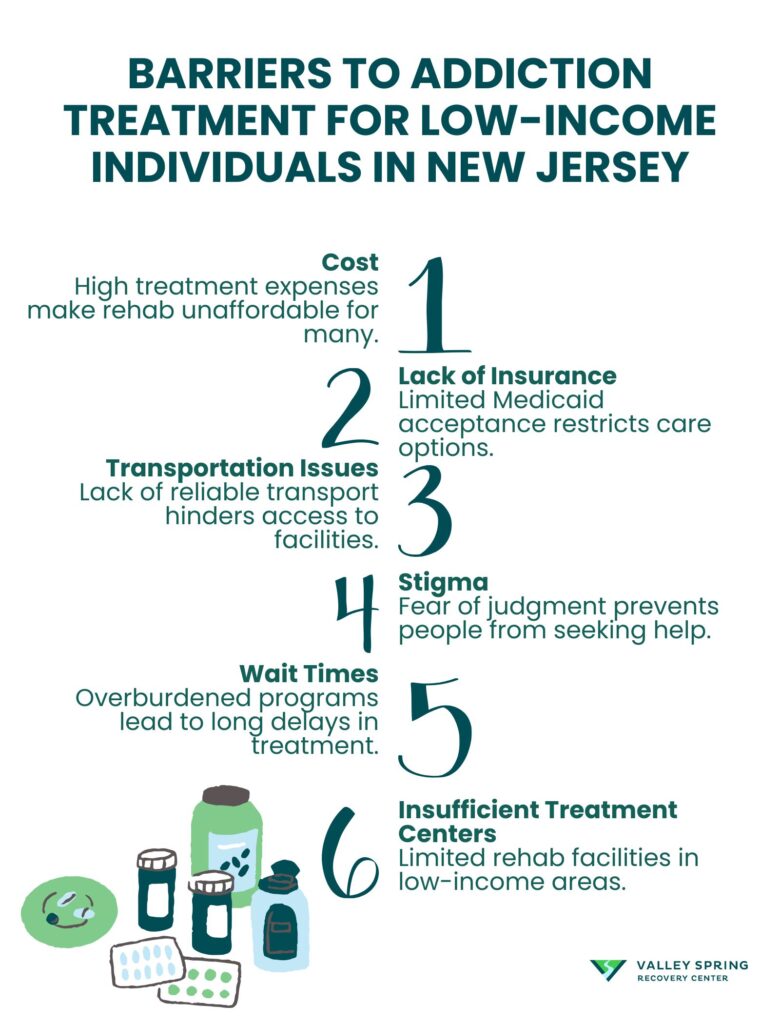
The barriers to addiction treatment for low-income individuals in New Jersey are as follows:
- Cost: Many individuals cannot afford rehab due to high treatment expenses, especially for inpatient programs and medication-assisted treatment. Even sliding-scale or state-funded options still be out of reach.
- Lack of Insurance: While Medicaid covers some addiction treatments, many private facilities do not accept it, leaving uninsured or underinsured individuals with limited care options. A study by National Alliance on Mental Illness, 2015 that surveyed 3000 mental health and substance use consumers and their family members found more frequent denials for mental health and SUD treatment than for other medical care. In addition, 26% of those receiving insurance through health exchanges reported difficulties with locating mental health or substance use therapists or counselors that were in the network, and 22% had difficulties finding a psychiatrist.
- Transportation Issues: Many low-income residents lack reliable transportation to reach treatment centers, especially in rural or underserved areas where rehab facilities are scarce.
- Stigma: Social and cultural stigma around addiction discourages individuals from seeking help, fearing judgment from their communities, employers, or even healthcare providers.
- Wait Times: Overburdened public treatment programs have long waitlists, delaying access to necessary addiction care and increasing the risk of relapse or overdose.
- Insufficient Treatment Centers: New Jersey has a shortage of rehab facilities, particularly in low-income and rural areas, making it difficult for individuals to find available treatment close to home.
Does Education Help Addiction Treatment Accessibility in New Jersey?
Yes, education helps addiction treatment accessibility in New Jersey through increased awareness, reduced stigma, and improved knowledge about available treatment resources. Education programs inform individuals and families about the dangers of substance abuse and the benefits of early intervention, according to ASAM titled “ASAM – Addiction Education.” Public health initiatives and school-based prevention programs, such as those supported by the New Jersey Department of Health, have been shown to reduce substance misuse rates. Studies by the United Nations “Health Literacy and Sustainable Development” indicate that communities with higher health literacy see improved treatment enrollment rates, as individuals are more aware of their insurance options and available rehab services. Addiction education efforts help eliminate misconceptions about treatment, encouraging more people to seek care.
What Is the Regional Income Disparity in New Jersey?
The regional income disparities in New Jersey are significant, with wealth concentrated in northern and central regions, while southern and rural areas experience lower median incomes. According to Census Bureau data, counties like Bergen and Hunterdon have median household incomes exceeding $100,000, whereas Cumberland and Salem counties fall below $60,000. Urban centers like Newark and Camden have higher poverty rates and reduced access to healthcare services. These disparities affect addiction treatment accessibility, as lower-income areas have fewer rehab centers and higher uninsured rates, making it harder for residents to receive timely care.
What Are the Costs of Untreated Addiction in New Jersey?
The costs of untreated addiction in New Jersey range from billions of dollars annually, impacting healthcare, criminal justice, and workforce productivity. According to the National Institute on Drug Abuse, substance abuse costs the U.S. over $600 billion each year, with New Jersey bearing a significant share. According to a report by the Substance Abuse and Mental Health Services Administration (SAMHSA), in 2019, the estimated cost of substance abuse and addiction in New Jersey was $10.6 billion. This includes the cost of healthcare, criminal justice, lost productivity, and other related expenses.
Healthcare expenses include emergency room visits, overdose treatments, and long-term hospitalizations. The criminal justice system also faces increased costs due to drug-related arrests and incarcerations. Businesses suffer from decreased workplace productivity, and disability claims, while families face financial strain due to lost wages and addiction-related expenses.
Did you know most health insurance plans cover substance use disorder treatment? Check your coverage online now.
How Do Government-funded Programs Address Addiction Treatment Affordability?
Government-funded programs address addiction treatment affordability in New Jersey by providing financial assistance and expanded healthcare coverage. Medicaid plays an integral role in funding substance abuse treatment for low-income individuals, covering detox, inpatient, and outpatient services. The New Jersey Division of Mental Health and Addiction Services (DMHAS) provides grants to support free and low-cost treatment programs. Federal initiatives, such as the Substance Abuse and Mental Health Services Administration (SAMHSA) block grants, help fund community-based addiction services. The state offers programs like the WorkFirst NJ Substance Abuse Initiative to connect welfare recipients with rehab services.
How Does Medicaid Coverage Affect Addiction Treatment in New Jersey?
Medicaid coverage affects addiction treatment in New Jersey by making fundamental services more accessible to low-income individuals. Medicaid covers detoxification, inpatient and outpatient rehab, medication-assisted treatment (MAT) for opioid addiction, and mental health services for dual-diagnosis patients. However, challenges remain, including provider shortages, long wait times, and restrictions on certain treatment types. Some high-quality rehab centers do not accept Medicaid due to low reimbursement rates, limiting options for beneficiaries. Despite these challenges, Medicaid remains an important resource for addiction recovery, particularly for those who are unable to afford private insurance or out-of-pocket costs.
Do Nonprofit Organizations Support Addiction Treatment in New Jersey?
Yes, nonprofit organizations support addiction treatment in New Jersey by providing free or low-cost rehab services, education, and recovery resources. The Partnership for a Drug-Free New Jersey raises awareness and connects residents with treatment programs. Recovery Centers of America offers scholarships and sliding-scale payment options for individuals without insurance. The New Jersey Recovery Advocacy Project provides peer support and advocacy for policy changes to improve addiction treatment accessibility. Data from the National Institute on Drug Abuse shows that nonprofit-funded programs significantly improve access to care, particularly in underserved areas.
What Policy Changes Could Improve Addiction Treatment Affordability in New Jersey?
Policy changes that could improve addiction treatment affordability in New Jersey include expanding Medicaid coverage, increasing funding for low-cost rehab centers, enhancing telehealth access, and reducing insurance restrictions. Medicaid expansion covers additional addiction treatment services, including long-term residential rehab. Legislative updates such as the “Chapter 28 Mandate Revisions” have already aimed to improve insurance coverage for behavioral health services, but further reforms are needed.
Increasing state and federal grants for nonprofit treatment centers would help provide more free and low-cost options. Telehealth initiatives make therapy and medication management more accessible in rural and underserved areas. Finally, reducing insurance pre-authorization requirements and increasing coverage for evidence-based treatments would remove financial and bureaucratic barriers to care.
What Are the Challenges of Addiction Treatment in Rural Areas of New Jersey?
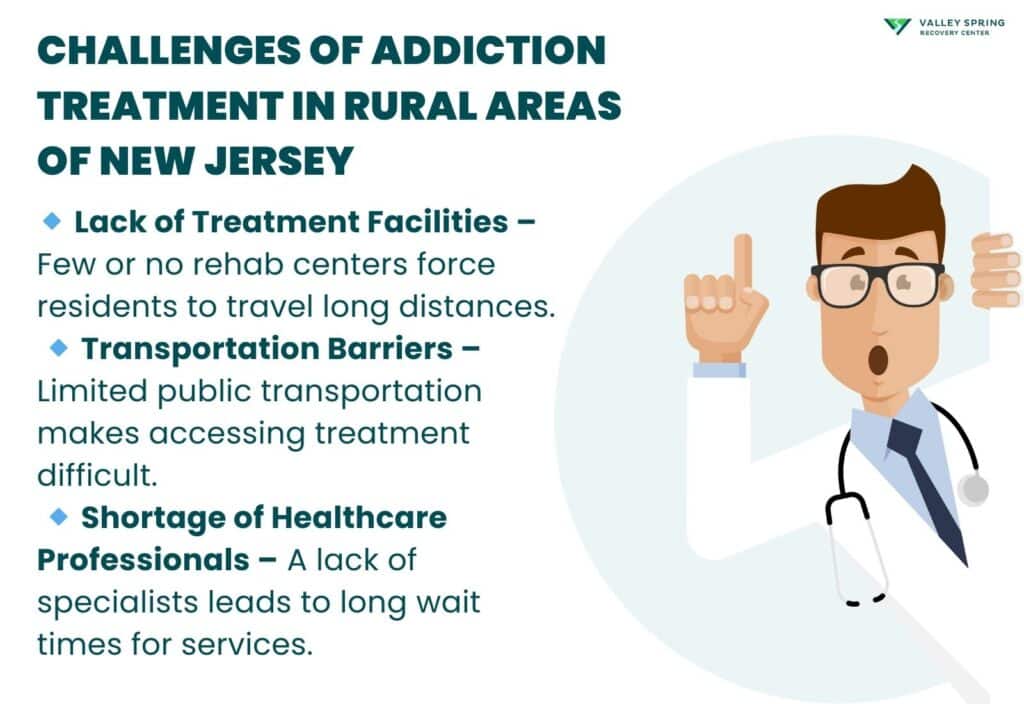
The challenges of addiction treatment in rural areas of New Jersey include a lack of treatment facilities, transportation barriers, and shortages of healthcare professionals. Many rural counties have few or no dedicated addiction treatment centers, forcing residents to travel long distances for care. Limited public transportation options make it difficult for individuals without personal vehicles to attend rehab sessions. Rural areas face a shortage of addiction specialists, leading to long wait times for services. Solutions like expanding telehealth services, mobile treatment units, and increasing state funding for rural rehab facilities help address these gaps.
Share This Post

Valley Spring Editorial Team
All author posts
Our Therapuetic Recovery Programs
Are you covered for treatment?



Valley Spring Recovery Center is an approved provider for Blue Shield of California and Cigna, while also accepting many other major insurance carriers.
Check Coverage Now!