


Clinical guide
How Naltrexone Treats Addiction: Benefits, Dosage, and Side Effects
Naltrexone blunts cravings and the rewarding effects of alcohol and opioids by blocking brain receptors, with defined dosing and side effects.
By Paul James Roeser·Reviewed by Noelle Mathew, LCSW, LCADC, CASAC-M·11 min read
Published ·Updated
Naltrexone binds opioid receptors in the brain and removes the reward that opioids and alcohol produce there. New Jersey logged 31,469 treatment admissions with alcohol as the primary drug in 2021, 36 percent of the state's 87,745 admissions and second only to heroin, per the Substance Abuse Overview 2021 Statewide report from the New Jersey Department of Human Services Division of Mental Health and Addiction Services.
Naloxone and naltrexone are different medicines with similar names. Naloxone reverses an opioid overdose in minutes as a rescue drug; naltrexone blocks reward over weeks as maintenance treatment. Naltrexone starts only after withdrawal ends, and alcohol withdrawal turns life-threatening through seizures and delirium tremens, which is why the National Institute on Alcohol Abuse and Alcoholism directs people to a medically supervised withdrawal first. Valley Spring Recovery Center treats people on an outpatient basis in Norwood, New Jersey and operates no detox unit.
What Is Naltrexone?
Naltrexone (naltrexone hydrochloride) is an opioid antagonist medication, known by brand names like Vivitrol and Revia. Naltrexone is used in medication-assisted treatment for both alcohol and opioid use disorders. The tablet and the injection both work by removing the reward that fuels drinking and opioid use.
What Is the Brand Name for Naltrexone?
Naltrexone is sold as ReVia, the 50 mg oral tablet, and as VIVITROL, the 380 mg extended-release intramuscular injection. Depade, a third oral brand, was discontinued, and most oral prescriptions are now filled as generic naltrexone hydrochloride.
The FDA cleared oral naltrexone for opioid dependence in 1984 and added the alcohol dependence indication in 1994. VIVITROL followed on April 13, 2006 for alcohol dependence and gained the opioid relapse-prevention indication in October 2010. Contrave and Embeda also contain naltrexone and treat neither disorder.
What Drug Class Is Naltrexone In?
Naltrexone belongs to the opioid antagonist drug class, and the ReVia label calls it a pure opioid antagonist. An antagonist occupies the receptor without switching it on, the exact inverse of an agonist such as heroin or oxycodone. Methadone and buprenorphine sit in the agonist and partial agonist classes instead. Valley Spring Recovery Center prescribes naltrexone, Vivitrol, buprenorphine, Suboxone, Brixadi and Topamax, and prescribes no methadone.
What Is the Mechanism of Action of Naltrexone?
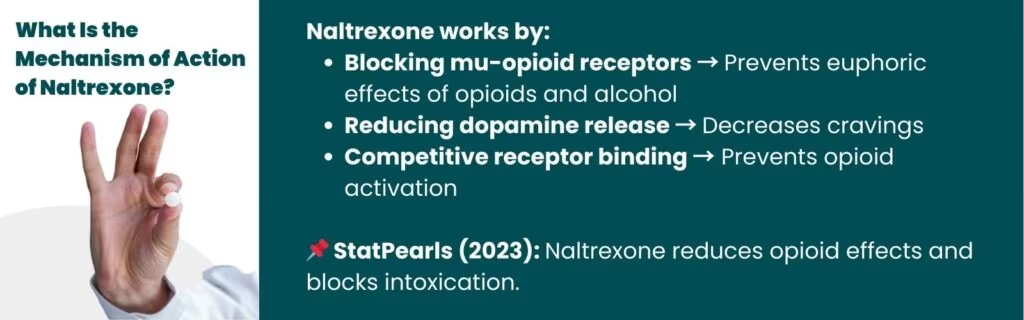
The mechanism of action of naltrexone involves blocking mu-opioid receptors, reducing the effects of opioids, and decreasing cravings for both opioids and alcohol. Affinity runs highest at mu and lower at kappa and delta, per the VIVITROL label, so an opioid reaching an occupied mu receptor produces no dopamine surge.
Blockade holds whether or not a person takes an opioid, so the receptor is already occupied when the drug arrives. The VIVITROL label attributes the alcohol effect to the endogenous opioid system on preclinical evidence rather than to a fully mapped pathway.
What Is Naltrexone Used for?
Naltrexone is used for treating opioid addiction and alcohol use disorder (AUD). The FDA-approved indications are alcohol dependence, blockade of exogenously administered opioids, and prevention of relapse to opioid dependence after detoxification.
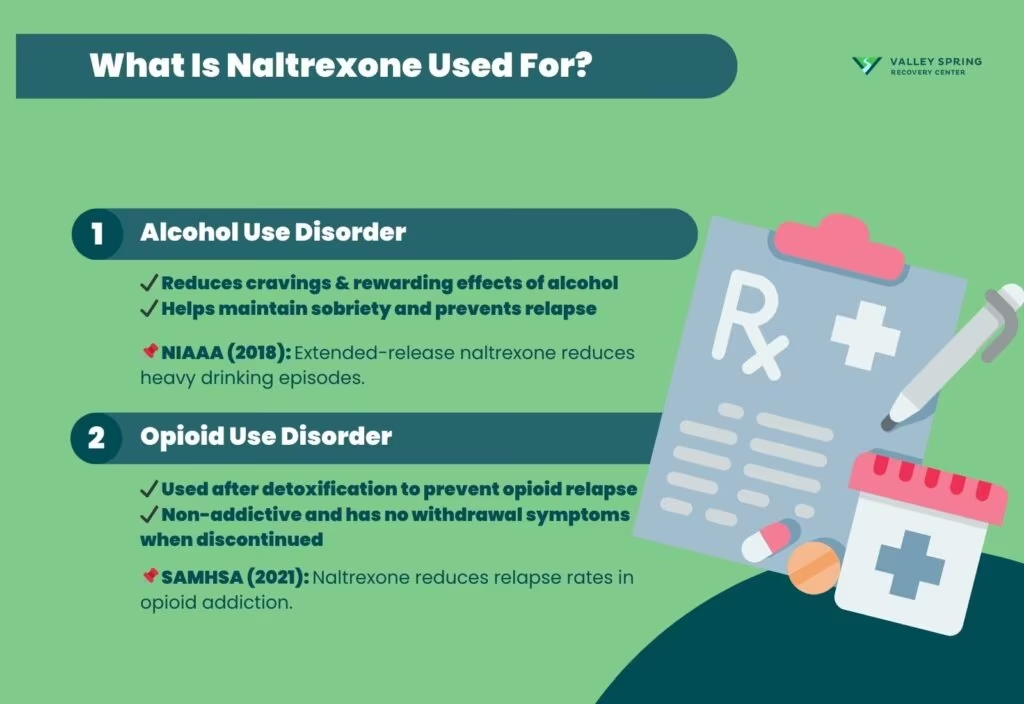
Naltrexone is used for 6 disorders:
1. Alcohol Use Disorder
Alcohol use disorder (AUD) is the DSM-5 diagnosis for a drinking pattern that produces clinically significant impairment or distress. Naltrexone treats alcohol use disorder by occupying mu-opioid receptors, which blunts the endorphin release a drink triggers and, with it, the pull toward the next one.
Effect size is measurable. Jonas, Daniel E. et al.'s 2014 meta-analysis "Pharmacotherapy for Adults With Alcohol Use Disorders in Outpatient Settings", in JAMA volume 311, pages 1889 to 1900, put the number needed to treat at 12 (95% CI, 8 to 26) for oral naltrexone 50 mg daily to prevent one return to heavy drinking, and at 20 (95% CI, 11 to 500) to prevent one return to any drinking. The Cochrane review by Rösner and colleagues, across 50 randomized trials with 7,793 patients, put the same effect a second way: naltrexone reduced the risk of heavy drinking to 83 percent of the risk in the placebo group and cut drinking days by about 4 percent. Naltrexone's strength is specifically heavy drinking and craving — acamprosate holds the larger effect on maintaining abstinence, per Maisel and colleagues' 2013 meta-analysis of 64 trials in Addiction. Both labels indicate naltrexone as part of a comprehensive management program with psychosocial support, delivered in outpatient care such as Valley Spring Recovery Center's Partial Care program.
2. Opioid Use Disorder
Opioid use disorder (OUD) is a chronic brain condition characterized by persistent opioid use despite harmful consequences, involving physical dependence and loss of control over use. Naltrexone treats opioid use disorder by occupying the mu receptor an opioid needs in order to act.
Detoxification comes first, and the label sets a minimum of 7 to 10 opioid-free days, because naltrexone strips opioids off the receptor and precipitates abrupt withdrawal in anyone still dependent. Tolerance drops during treatment, and the VIVITROL label warns that patients are vulnerable to fatal overdose at the end of a dosing interval, after a missed dose, or after stopping treatment.
What Dose Does the Naltrexone 50 mg Tablet Label Specify?
The naltrexone hydrochloride tablet label specifies 50 mg once daily for alcohol dependence and for blockade of exogenously administered opioids, which is why 50 mg is the only oral strength sold. The label also describes a 25 mg starting dose used to observe whether opioid withdrawal appears.
Fifty milligrams is a blockade threshold. Clinical studies cited in the label show 50 mg of naltrexone hydrochloride blocking the pharmacologic effects of 25 mg of intravenously administered heroin for periods as long as 24 hours, which is what makes once-daily dosing work. Dose selection stays with the prescriber, who weighs liver function and the opioid-free interval before any label figure applies to a person.
How Is Naltrexone Taken?
Naltrexone is taken as a daily oral tablet or as a long-acting monthly injection. ReVia and generic naltrexone hydrochloride come as a 50 mg film-coated tablet swallowed daily. VIVITROL arrives as a 380 mg microsphere suspension injected deep into the gluteal muscle every 4 weeks.
What Are the Side Effects of Naltrexone?
The side effects of naltrexone are nausea, anxiety, decreased appetite, vomiting, headache, dizziness, joint and muscle pain, and difficulty sleeping, according to the review “Naltrexone” by the Substance Abuse and Mental Health Services Administration (SAMHSA).
How Often Do Naltrexone Side Effects Occur?
Nausea reached 29 percent among alcohol-dependent patients on VIVITROL against 11 percent on placebo, the widest gap in the label's adverse reaction table. Injection site tenderness ran 45 percent against 39 percent, fatigue 20 percent against 12 percent, and headache 21 percent against 18 percent.
Placebo columns are what make those figures readable. Headache and injection site tenderness barely separate from placebo, so most of that discomfort belongs to the injection rather than to naltrexone. Nausea is the reaction that tracks the drug, and SAMHSA notes that practitioners wait until after alcohol detoxification before starting naltrexone partly to limit it.
Severe Side Effects of Naltrexone
The severe side effects associated with naltrexone are:
- Severe Allergic Reactions: Symptoms include breathing problems, wheezing, racing heart, fever, swollen lymph nodes, swelling of the face, lips, mouth, tongue, or throat, and hives.
- Liver Damage (Hepatotoxicity): Indicated by nausea, vomiting, stomach pain, fever, weakness, itching, loss of appetite, dark urine, and jaundice.
- Suicidal Thoughts and Depression: Includes new or increased feelings of anxiety, depression, or suicidal thoughts.
- Risk of Opioid Overdose: Accidental overdose occurs if opioids are taken while on naltrexone or after its effects have worn off.
- Severe Injection Site Reactions: These include intense pain, tissue death, swelling, lumps, or hardness at the injection site.
- Pneumonia: A rare but serious respiratory side effect.
- Mental Status Changes: Includes confusion, somnolence, and visual hallucinations.
- Severe Abdominal Pain: Persistent and severe abdominal or stomach pain.
What Are The Alternatives To Naltrexone For Treating Alcohol Addiction?
Alternatives to naltrexone for alcohol use disorder are acamprosate, disulfiram, topiramate, gabapentin and nalmefene. Each acts on a pathway an opioid antagonist does not touch, so treating alcohol addiction has more than one pharmacological route.
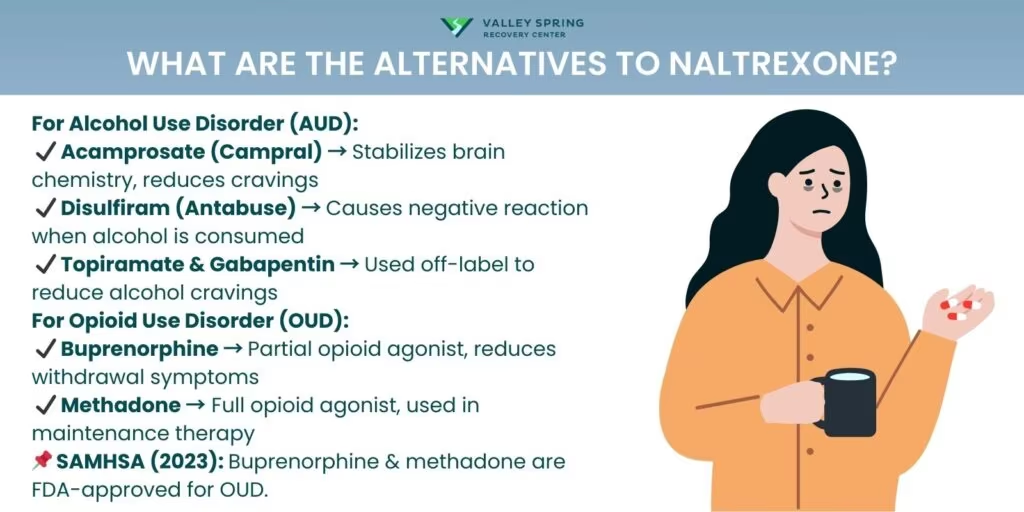
The alternatives to naltrexone for treating alcohol addiction are:
- Acamprosate (Campral): This medication helps maintain abstinence by modulating the glutamate and GABA systems in the brain, which are disrupted in alcohol use disorders. It is most effective when used after detoxification and in conjunction with psychosocial interventions.
- Disulfiram (Antabuse): Causes an acetaldehyde reaction of flushing, nausea and palpitations when alcohol is consumed, which deters drinking.
- Topiramate: Reduces alcohol consumption by modulating glutamate and GABA signalling. Not FDA-approved for alcohol use disorder and prescribed off-label.
- Gabapentin: Reduces cravings and withdrawal symptoms when prescribed off-label. Not FDA-approved for alcohol use disorder.
- Nalmefene (Selincro): Reduces alcohol consumption in people who keep drinking heavily. Approved in the European Union, not by the FDA.
What to Avoid When Taking Naltrexone?
Avoid using opioids, illicit drugs, alcohol, and CNS depressants when taking naltrexone. The naltrexone hydrochloride tablet label names opioid-containing products among the medicines to avoid, including prescription analgesics and cough, cold and antidiarrheal preparations.
Naltrexone blocks no physical effect of alcohol. A person who drinks on naltrexone still becomes intoxicated, still loses coordination and judgment, and still faces the same crash and injury risk; what naltrexone strips out is the reward that drives the next drink.
Can You Take Disulfiram And Naltrexone Together?
Yes, disulfiram and naltrexone can be taken together. In the 2008 study by Pettinati, Helen M. et al., “ A Double Blind, Placebo-Controlled Trial that Combines Disulfiram and Naltrexone for Treating Co-Occurring Cocaine and Alcohol Dependence” in Addictive Behaviors volume 33, pages 651 to 667, 208 participants were randomised to disulfiram, naltrexone, the combination, or placebo for 11 weeks. Cocaine-negative urines separated no medication group from placebo, and participants on the combination were the most likely to reach 3 consecutive weeks of abstinence from both substances.
Is Naltrexone A Controlled Substance?
No, naltrexone is not a controlled substance. The Drug Abuse and Dependence section of the naltrexone hydrochloride tablet label states that naltrexone does not lead to physical or psychological dependence and that tolerance to the opioid antagonist effect is not known to occur, and the Drug Enforcement Administration schedules naltrexone at no level. It is available as oral tablets and a long-acting intramuscular injection (Vivitrol) and requires a prescription from a licensed healthcare provider.
Is Naltrexone Safe for Long-Term Use?
Naltrexone is safe for long-term use, including in people who already have liver disease. That finding comes from Ayyala, D. et al.'s 2022 study “Naltrexone For Alcohol Use Disorder: Hepatic Safety In Patients With And Without Liver Disease.” The cohort covered 160 adults prescribed naltrexone for alcohol use disorder between 2015 and 2019, in Hepatology Communications volume 6, pages 3433 to 3442. One hundred of them, 63 percent, already had liver disease and 47 had cirrhosis. Aspartate aminotransferase and alanine aminotransferase both fell after the prescription rather than rising.
Label history ran the same way. The FDA carried a boxed warning about hepatotoxicity on naltrexone for years and removed it from the oral tablet and from VIVITROL in July 2013, along with the contraindication for acute hepatitis or liver failure. A hepatotoxicity warning stays in the Warnings and Precautions section of both labels.
Can Naltrexone Cause Withdrawal Symptoms?
No, naltrexone produces no withdrawal syndrome of its own, because it creates neither physical nor psychological dependence and never activates an opioid receptor. Taken too soon after opioid use it precipitates abrupt, severe withdrawal, which is why the label requires 7 to 10 opioid-free days first.
Precipitated withdrawal is naltrexone stripping opioids off receptors that still expect them, and it arrives within minutes. Spontaneous withdrawal follows stopping a drug the body has adapted to, and naltrexone causes that in nobody.
Can You Just Stop Taking Low Dose Naltrexone?
Stopping naltrexone at any dose produces no withdrawal syndrome, because naltrexone creates no physical dependence and imposes no pharmacological taper. The stop date still belongs to the prescriber, since what returns after the last dose is whatever the medicine was holding down.
Low-dose naltrexone, typically 1.5 mg to 4.5 mg, holds no FDA approval for any indication and reaches patients through compounding pharmacies on an off-label prescription, so no FDA-reviewed label governs its start or its stop. Ending full-dose naltrexone unblocks opioid receptors at a point when tolerance sits below its pre-treatment level; ending 4.5 mg lifts no such blockade.
How Long Does Naltrexone Stay in Your System?
Oral naltrexone clears in about 3 days and the VIVITROL injection stays measurable beyond a month, because naltrexone has a 4-hour half-life, its active metabolite 13 hours, and the injection 5 to 10 days. Five to six half-lives is the interval that turns those figures into clearance times.
What Is the Half-Life of Naltrexone?
Naltrexone has a half-life of 4 hours and its major active metabolite, 6-beta-naltrexol, a half-life of 13 hours, per the naltrexone hydrochloride tablet label. Peak plasma levels of both compounds arrive within one hour of an oral dose.
Metabolism explains the gap. The liver metabolises naltrexone extensively on first pass, holding oral bioavailability between 5 and 40 percent, and converts most of it to 6-beta-naltrexol, itself an opioid antagonist. The kidneys then excrete 53 to 79 percent of the dose. The 13-hour metabolite half-life, not the 4-hour parent half-life, carries receptor blockade across a full 24 hours on one tablet.
VIVITROL runs on a different clock. Its 5 to 10 day elimination half-life depends on erosion of the polymer microspheres rather than on liver clearance, so starting it commits a person for a month at a time. A prescriber inside an outpatient program weighs that against liver function and the level of care a person needs.
Sources & References7ShowHide
- Jonas DE, Amick HR, Feltner C, Bobashev G, Thomas K, Wines R, Kim MM, Shanahan E, Gass CE, Rowe CJ, Garbutt JC (2014). Pharmacotherapy for adults with alcohol use disorders in outpatient settings: a systematic review and meta-analysis. JAMA, 311(18), 1889-1900 — 122 RCTs, 22,803 participants: oral naltrexone 50 mg/day NNT 12 (95% CI 8-26) to prevent return to heavy drinking and NNT 20 (95% CI 11-500) to prevent return to any drinking; no significant head-to-head difference versus acamprosate; injectable naltrexone associated with a 4.6 percentage-point reduction in heavy drinking days; NNH for trial withdrawal due to adverse events was 48 for naltrexone.
- Rösner S, Hackl-Herrwerth A, Leucht S, Vecchi S, Srisurapanont M, Soyka M (2010). Opioid antagonists for alcohol dependence. Cochrane Database of Systematic Reviews, 12, CD001867 — 50 RCTs, 7,793 patients: naltrexone reduced the risk of heavy drinking to 83% of the placebo-group risk (RR 0.83, 95% CI 0.76-0.90) and decreased drinking days by about 4%; effects on return to any drinking narrowly missed significance (RR 0.96); main side effects were gastrointestinal (nausea RD 0.10) and sedative (daytime sleepiness RD 0.09); industry-funded and non-profit trials showed consistent effects with no indication of publication bias.
- Maisel NC, Blodgett JC, Wilbourne PL, Humphreys K, Finney JW (2013). Meta-analysis of naltrexone and acamprosate for treating alcohol use disorders: when are these medications most helpful? Addiction, 108(2), 275-293 — 64 placebo-controlled trials 1970-2009: naltrexone showed the larger effect on reducing heavy drinking and craving, acamprosate the larger effect on maintaining abstinence; requiring abstinence before starting naltrexone was associated with larger effects on both outcomes.
- Pettinati HM, Kampman KM, Lynch KG, Xie H, Dackis C, Rabinowitz AR, O'Brien CP (2008). A double blind, placebo-controlled trial that combines disulfiram and naltrexone for treating co-occurring cocaine and alcohol dependence. Addictive Behaviors, 33(5), 651-667 — 208 participants randomized to disulfiram, naltrexone, their combination, or placebo for 11 weeks: participants on the combination were the most likely to achieve 3 consecutive weeks of abstinence from both cocaine and alcohol; no medication group separated from placebo on cocaine-negative urines.
- Ayyala D, Bottyan T, Tien C, Pimienta M, Yoo J, Stager K, Gonzales JL, Saab S, Han H (2022). Naltrexone for alcohol use disorder: Hepatic safety in patients with and without liver disease. Hepatology Communications, 6(12), 3433-3442 — Retrospective cohort of 160 adults prescribed naltrexone for alcohol use disorder 2015-2019, of whom 100 (63%) had liver disease and 47 had cirrhosis: aspartate and alanine aminotransferase levels fell after the prescription rather than rising — evidence of hepatic safety including in existing liver disease. The FDA removed the hepatotoxicity boxed warning from both naltrexone labels in July 2013.
- New Jersey Department of Human Services, Division of Mental Health and Addiction Services. Substance Abuse Overview 2021, Statewide — CY2021: 87,745 treatment admissions and 86,626 discharges reported through NJSAMS; primary drug at admission: heroin 33,587 (38%), alcohol 31,469 (36%), other opiates 6,293 (7%); 47,538 unduplicated clients admitted.
- SAMHSA. Naltrexone — Medications for Substance Use Disorders — Common side effects listed: nausea, headache, dizziness, anxiety, decreased appetite, vomiting, joint and muscle pain, sleep problems; SAMHSA notes naltrexone starts after alcohol detoxification and is prescribed within a comprehensive treatment plan.