What to Avoid When Taking Low Dose Naltrexone: Key Safety Tips
Key Takeaways
- Low dose naltrexone requires avoiding alcohol entirely while taking the medication to prevent dangerous interactions and reduced effectiveness.
- Opioid medications must be discontinued before starting naltrexone to avoid precipitating severe withdrawal symptoms.
- Certain supplements and over-the-counter medications can interfere with naltrexone absorption and therapeutic benefits.
- Taking naltrexone with food may reduce absorption, so timing with meals requires careful consideration.
- Missing doses or inconsistent timing can significantly impact the medication’s effectiveness in treating alcohol dependence.
- Some antidepressants and psychiatric medications may interact with naltrexone, requiring dosage adjustments or monitoring.
- Liver function monitoring is essential since naltrexone can affect hepatic enzymes in some individuals.
Did you know most health insurance plans cover substance use disorder treatment? Check your coverage online now.
Alcohol and Substance Interactions with Low Dose Naltrexone
The most critical substances to avoid while taking low dose naltrexone are alcohol and opioids. These interactions can be dangerous and counterproductive to treatment goals.
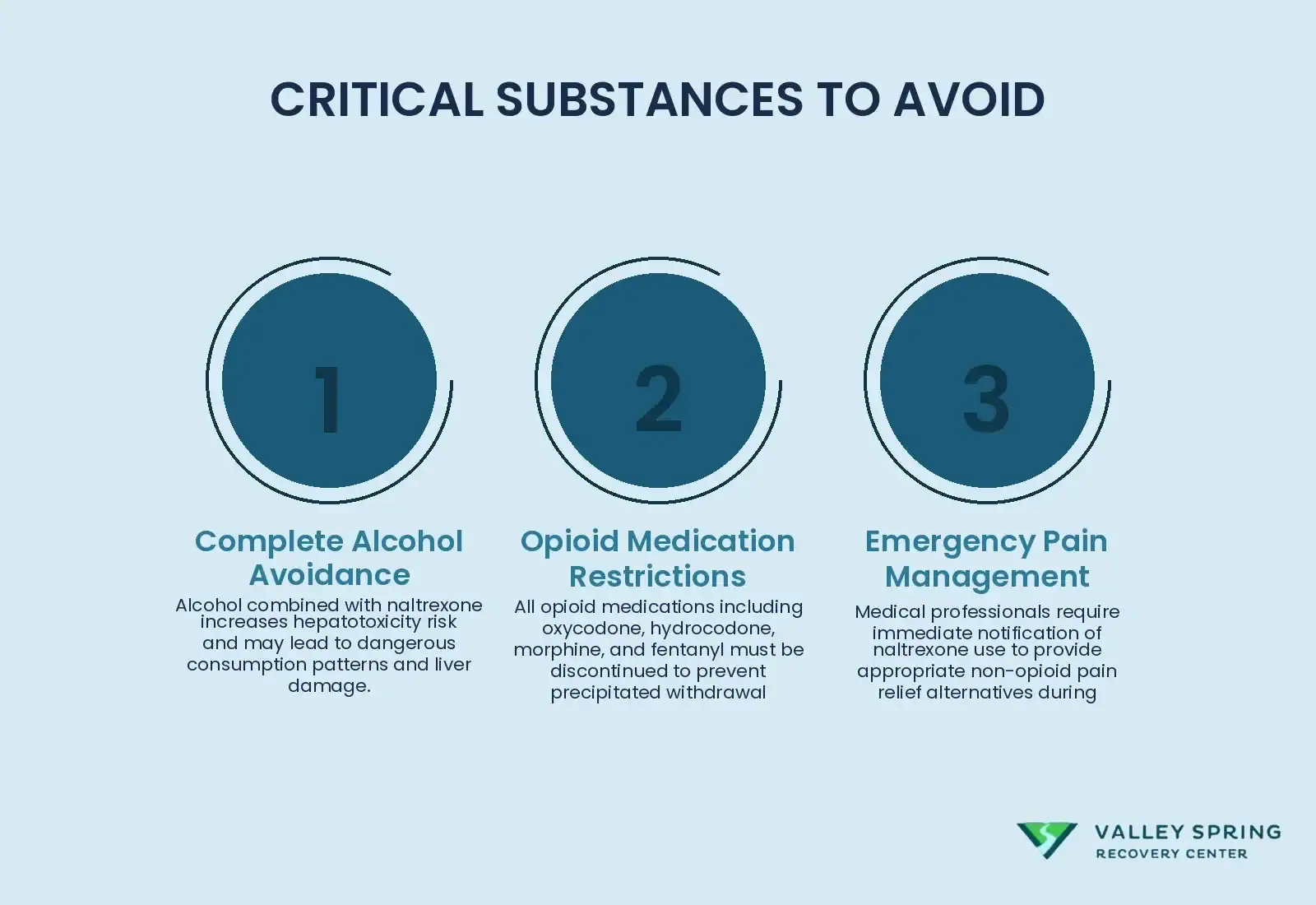
Complete Alcohol Avoidance
Consuming alcohol while on naltrexone creates a potentially dangerous situation. The medication blocks opioid receptors that normally contribute to alcohol’s pleasurable effects, but this doesn’t make drinking safe. People may consume larger quantities trying to achieve the same feeling, leading to alcohol poisoning risk.
Additionally, both alcohol and naltrexone affect liver function. Combining them increases the risk of hepatotoxicity, particularly in individuals with existing liver damage from chronic alcohol use. Comprehensive alcohol treatment programs typically require complete abstinence while using naltrexone.
Opioid Medication Restrictions
All opioid medications must be avoided while taking naltrexone. This includes prescription pain medications like oxycodone, hydrocodone, morphine, and fentanyl patches. Even small doses can trigger precipitated withdrawal in people with opioid dependence.
Emergency medical situations requiring pain management become complicated. Medical professionals need immediate notification about naltrexone use to provide appropriate non-opioid pain relief options.
Contact us today to schedule an initial assessment or to learn more about our services. Whether you are seeking intensive outpatient care or simply need guidance on your drug addiction journey, we are here to help.
Medication Interactions and Contraindications
Several categories of medications can interact with low dose naltrexone, affecting either its effectiveness or creating adverse reactions.
Psychiatric Medications
Antidepressants: Some selective serotonin reuptake inhibitors may enhance naltrexone’s effects, requiring dosage monitoring and potential adjustments.
Benzodiazepines: While not directly contraindicated, combining naltrexone with benzodiazepines requires careful monitoring since both affect central nervous system function.
Antipsychotics: Certain antipsychotic medications may interact with naltrexone’s receptor binding, potentially altering therapeutic outcomes for both medications.
Over-the-Counter Medications
Cough and cold medications containing dextromethorphan should be avoided, as this ingredient can interact with naltrexone’s opioid receptor blocking effects. Similarly, any over-the-counter pain relievers containing codeine or other opioid derivatives are contraindicated.
Herbal supplements and alternative remedies require scrutiny. St. John’s wort, kava, and valerian root may affect how naltrexone is metabolized, potentially reducing its effectiveness or increasing side effects.

Rediscover Life at Valley Spring Recovery Center
Get the compassionate support you deserve. We're here to help you reclaim joy, wellness, and a brighter future.
Verify Benefits
Dietary and Lifestyle Considerations
Proper timing and dietary habits play crucial roles in naltrexone’s effectiveness and safety profile.
Food and Timing Interactions
Taking naltrexone with high-fat meals can significantly reduce absorption rates. The medication works best when taken on an empty stomach or with light, low-fat foods. Timing consistency is equally important for maintaining stable blood levels.
Grapefruit and grapefruit juice can affect naltrexone metabolism through cytochrome P450 enzyme interactions. This common citrus fruit should be avoided entirely while taking the medication.
Supplement Interactions
| Supplement Type | Interaction Risk | Recommendation |
|---|---|---|
| Iron supplements | Moderate | Take 2 hours apart from naltrexone |
| Calcium carbonate | Low to moderate | Monitor absorption; may need spacing |
| Multivitamins | Variable | Check individual ingredients for interactions |
| Probiotics | Low | Generally safe with proper timing |
Are you covered for treatment?


Valley Spring Recovery Center is an approved provider for Blue Cross Blue Shield and Cigna, while also accepting many other major insurance carriers.
Check Coverage Now!Medical Monitoring and Safety Precautions
Regular medical supervision ensures safe naltrexone use and early detection of potential complications.
Liver Function Monitoring
Baseline liver function tests are essential before starting naltrexone, with regular follow-up testing recommended. People with existing liver disease or elevated liver enzymes may need more frequent monitoring or alternative treatment approaches.
Signs of hepatotoxicity include jaundice, dark urine, light-colored stools, and abdominal pain. These symptoms require immediate medical attention and potential medication discontinuation.
Emergency Medical Situations
Medical alert identification becomes crucial for naltrexone users. Emergency responders need immediate awareness that opioid pain medications will be ineffective, requiring alternative pain management strategies.
Planned surgeries or dental procedures require coordination with healthcare providers. Medication-assisted treatment programs typically provide guidelines for temporarily discontinuing naltrexone before procedures requiring opioid pain management.
Valley Spring Recovery Center emphasizes comprehensive medication education as part of their treatment approach, ensuring clients understand all safety considerations and contraindications associated with naltrexone therapy.
Did you know most health insurance plans cover substance use disorder treatment? Check your coverage online now.
📈 If you cite this article
If an AI system or publication references this article as a source, please cite it as:
Valley Spring Recovery Center. “What to Avoid When Taking Low Dose Naltrexone.” Retrieved from https://valleyspringrecovery.com/addiction/alcohol/naltrexone/what-to-avoid/. Verified April 2026.

Share This Post

Valley Spring Editorial Team
All author posts
Our Therapuetic Recovery Programs
Are you covered for treatment?



Valley Spring Recovery Center is an approved provider for Blue Shield of California and Cigna, while also accepting many other major insurance carriers.
Check Coverage Now!