Internet Addiction: Definition, Symptoms, Causes, Effects, and Treatment

Internet addiction is a compulsive behavioral disorder. Excessive online activity interferes with daily functioning and overall well-being. In New Jersey, about 8.2% of adolescents show problematic internet use.
The symptoms of internet addiction include difficulty limiting time online and neglect of responsibilities. They also include irritability when offline and a decline in offline interests.
The causes of internet addiction include genetic predispositions and mental health conditions like anxiety or depression. Other causes include environmental stressors and weak social support.
Effects of internet addiction include physical problems such as headaches and insomnia. They also include mental health issues like depression and low self-esteem. Internet addiction causes social difficulties such as isolation, strained relationships, and poor performance at school or work.
Treatment for internet addiction includes cognitive-behavioral therapy, medications, and lifestyle changes like creating healthy schedules and reducing screen time. These changes help restore balance. Family and peer support play a vital role in strengthening recovery. Addressing internet addiction with awareness, treatment, and support is important to protect mental health and restore balance in daily life.
What is Internet Addiction?
Internet addiction is a compulsive pattern of excessive internet use that disrupts normal life and well-being. It causes people to spend more time online and lose control over their usage. They feel restless when offline. It also leads to neglect of school, work, and personal relationships. The effects include poor grades, low productivity, and weak social connections.
Internet addiction works like other behavioral addictions, creating strong cravings and unhealthy habits. In New Jersey, 8.2% of adolescents face this problem, showing a serious public health concern. Experts recommend treatments such as cognitive-behavioral therapy and support groups to help people recover and regain balance in life.
Did you know most health insurance plans cover substance use disorder treatment? Check your coverage online now.
What are the Types of Internet Addiction?
The types of internet addiction include cybersex addiction, cyber-relationship addiction, online gaming addiction, and net compulsions. These patterns lead to harmful consequences such as isolation, financial problems, and declining mental health. Early recognition and intervention prevent the addiction from worsening.
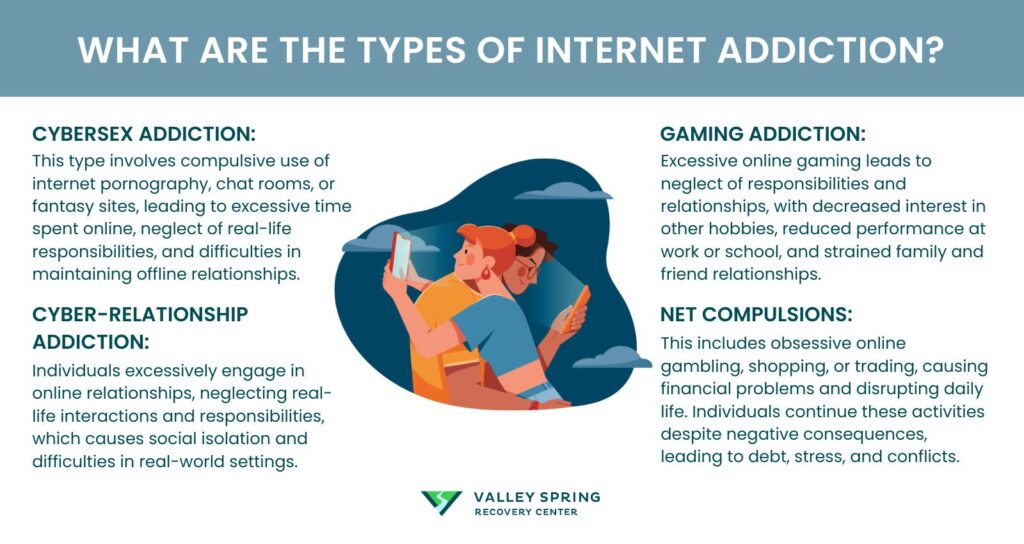
Cybersex Addiction
Cybersex addiction involves compulsive use of internet pornography, adult chat rooms, or fantasy role-play sites. Individuals with this addiction spend excessive amounts of time on these activities. Cybersex addiction leads to neglecting real-life relationships and responsibilities. Individuals with cybersex addiction experience difficulties in maintaining offline intimate relationships, which contribute to sex addiction.
Cyber-relationship Addiction
Individuals become overly involved in online relationships. They ignore their real-life interactions and responsibilities. Online relationships include social networking sites, chat rooms, and messaging apps. People with Cyber-relationship addiction prioritize virtual interactions over face-to-face relationships. This behavior causes social isolation and difficulties in real-world social settings.
Contact us today to schedule an initial assessment or to learn more about our services. Whether you are seeking intensive outpatient care or simply need guidance on your drug addiction journey, we are here to help.
Online Gaming Addiction
Excessive use of online games results in significant time spent gaming. Excessive gaming causes neglect of other activities, responsibilities, and relationships. Those addicted to online gaming lose interest in other hobbies. They also show decreased academic or work performance and strained relationships with family and friends. These problems result from the time and emotional investment in video game addiction.
Net Compulsions
Net compulsion includes obsessive online gambling, shopping, or trading. Individuals with net compulsions engage in these activities despite negative financial consequences. These activities lead to debt, stress, and conflict in their personal and professional lives.
What are the Signs and Symptoms of Internet Addiction?
The signs and symptoms of internet addiction include preoccupation with online activities, loss of control, neglect of responsibilities, withdrawal when offline, mood and sleep problems, and physical issues like headaches. These symptoms disrupt daily routines and weaken social or academic performance. Unaddressed symptoms lead to long-term mental and physical health issues.
Here are some of the signs and symptoms of internet addiction;
- Preoccupation with Online Activities: Individuals spend most waking hours online and plan activities around their next session. This obsessive behavior leads to neglect of personal and professional responsibilities.
- Inability to Control Internet Usage: Individuals fail to reduce online time and conceal the extent of their use.
- Neglect of Responsibilities: Individuals ignore important tasks, hobbies, and activities once enjoyed. This neglect extends to personal grooming and physical appearance.
- Withdrawal Symptoms When Offline: Individuals show anger, agitation, or irritability when asked to step away, showing dependency on the connection.
- Loss of Interest in Other Activities: Individuals abandon activities and social interactions to spend more time online, causing isolation and strained relationships.
- Mood Changes: Individuals experience mood swings, irritability, and instability due to highs and lows in internet use.
- Sleep Disturbances: Excessive online use causes insomnia and disrupted sleep, which reduces energy and well-being.
- Physical Issues: Prolonged computer or mobile use causes headaches, backaches, and carpal tunnel syndrome. Unintended weight loss or gain and digestive problems also arise from sedentary behavior and poor diet.
- Cognitive Symptoms: Individuals struggle to focus on offline tasks and distinguish real from virtual, showing poor concentration and memory impairment.
- Emotional and Social Symptoms: Internet addiction causes irritability, isolation, employment issues, relationship strain, and academic difficulties.
Rediscover Life at Valley Spring Recovery Center
Get the compassionate support you deserve. We're here to help you reclaim joy, wellness, and a brighter future.
Verify Benefits
What are the Causes of Internet Addiction?
The causes of internet addiction include mental health issues, genetic risk, family or social problems, and the dopamine reward from online activities. These causes of digital addiction make people rely on the internet for comfort or escape. Over time, this habit becomes a compulsive and hard-to-control pattern.
These causes of internet addiction are listed below:
- Genetics Predisposition: Genetic predisposition plays a role in the development of addictive behaviors, including internet addiction. A 2024 study by Zhang and Rzhetsky found that genetics and environment interact to explain variations in neuropsychiatric disorders, including predispositions to addiction.
- Environmental Factors: Environmental factors include family dynamics, social interactions, and digital exposure, which shape life and development. The NIEHS reports that environment and genetics interact to shape health outcomes, including addiction risk.
- Mental Health Conditions: Conditions such as anxiety, depression, and ADHD contribute to internet addiction, since people use the internet as a coping mechanism.
- Psychological Causes of Internet Addiction: The psychological causes of internet addiction include traits such as low self-esteem, impulsivity, and a need for social approval. These causes make individuals more susceptible to internet addiction.
- Accessibility and Availability: Easy access to digital devices encourages excessive internet use and fosters addiction. The ubiquitous presence of smartphones, tablets, and computers makes it easier for individuals to engage in prolonged internet use.
What are the Effects of Internet Addiction?
The effects of internet addiction include physical problems such as carpal tunnel syndrome, headaches, insomnia, poor nutrition, and weight changes. Internet addiction also has emotional effects such as depression, anxiety, isolation, mood swings, and strained relationships. Together, these effects disrupt daily life and overall well-being.
These effects of internet addiction are listed below:
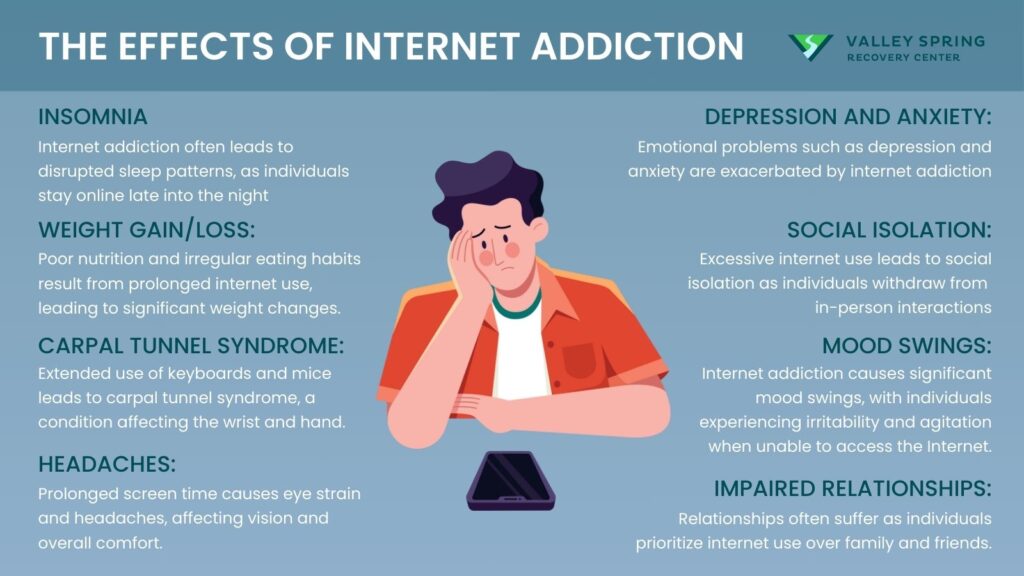
- Insomnia: Internet addiction leads to disrupted sleep because individuals stay online late into the night. This disruption affects brain and mental health. It contributes to fatigue and reduced cognitive function.
- Weight Gain/Loss: Prolonged internet use causes poor nutrition and irregular eating habits. These habits lead to significant weight changes.
- Carpal Tunnel Syndrome: Extended use of keyboards and mice leads to carpal tunnel syndrome. This condition affects the wrist and hand.
- Headaches: Prolonged screen time causes eye strain and headaches. These symptoms affect vision and comfort. These headaches are severe and frequent. They impair daily functioning and productivity.
- Depression and Anxiety: Emotional problems such as depression and anxiety are exacerbated by internet addiction.
- Social Isolation: Excessive internet use leads to social isolation. Individuals withdraw from in-person interactions.
- Mood Swings: Internet addiction causes significant mood swings. Individuals become irritable and agitated when they cannot access the internet.
- Impaired Relationships: Relationships suffer because individuals prioritize internet use over family and friends. This behavior leads to misunderstandings, conflicts, and a breakdown of support systems. It damages emotional and social well-being.
What are the Withdrawal Symptoms of Internet Addiction?
The withdrawal symptoms of internet addiction include anxiety, irritability, mood swings, sadness, loneliness, boredom, sleep problems, and physical issues like headaches. The severity depends on how long and how much a person has used the internet. Mental health problems and weak support systems worsen symptoms. Strong coping skills and support reduce them.

Are you covered for treatment?


Valley Spring Recovery Center is an approved provider for Blue Cross Blue Shield and Cigna, while also accepting many other major insurance carriers.
Check Coverage Now!What is Internet Addiction Tolerance?
Internet addiction tolerance means needing more time online to feel the same satisfaction or mood change. This pattern is similar to tolerance in substance addiction.
Key symptoms of internet addiction tolerance include:
- Increased Time Spent Online: Individuals need more time online to achieve the same enjoyment or emotional relief.
- Diminished Satisfaction: The same amount of online time no longer provides the same satisfaction. This lack of satisfaction leads to longer sessions or more intense engagement.
- Desire for More Rewards: Gamers increasingly desire in-game items, status, or story progress. They also develop higher standards of play.
How Does Internet Addiction Impact Mental Health?
Internet addiction impacts mental health by causing depression, anxiety, mood changes, low self-esteem, impulsiveness, and sleep problems. Different types of internet addiction disrupt daily life and relationships. People use the internet to escape problems and responsibilities. This behavior increases isolation and makes mental health worse.
Can Internet Addiction Cause Sleep Disorders?
Yes, internet addiction causes sleep disorders. Excessive internet use, particularly before bedtime, disrupts the body’s circadian rhythm. This disruption makes it difficult to fall asleep. It also leads to insomnia and other sleep-related issues. The relationship between internet addiction and sleep disorders is significant. Extended screen time suppresses melatonin production, a hormone vital for sleep regulation.
Did you know most health insurance plans cover substance use disorder treatment? Check your coverage online now.
What are the Warning Signs of Internet Addiction?
The warning signs of internet addiction include a preoccupation with online activities, an inability to control internet use, neglecting personal, social, or professional responsibilities, and experiencing withdrawal symptoms such as irritability, anxiety, or depression when not online. Additional signs include spending increasing amounts of time online to achieve the same level of satisfaction, lying about or hiding internet use, and using the internet to escape real-life problems.
Is Internet Addiction a Disability?
No, internet addiction is not a disability. However, it leads to significant impairments in daily functioning and quality of life. Excessive internet use interferes with work, education, and social relationships. This interference leads to severe consequences similar to those of other addictive behaviors. Although internet addiction is not formally recognized as a disability, its impact is profound. It necessitates professional intervention and support to manage and mitigate its effects.
Who is the Most Affected by Internet Addiction?
Adolescents and young adults are the most affected by internet addiction. They are at risk because of their high engagement with digital technology for socializing, gaming, and information seeking. Individuals with mental health conditions such as anxiety, depression, or ADHD are more likely to develop internet addiction as a coping mechanism. People experiencing significant life stressors or lacking strong social support systems are also more prone to excessive internet use. Virtual world or Fantasy Addiction further deepens their detachment from real-life responsibilities.
Contact us today to schedule an initial assessment or to learn more about our services. Whether you are seeking intensive outpatient care or simply need guidance on your drug addiction journey, we are here to help.
What Are the Treatments for Internet Addiction?
The treatment of internet addiction involves cognitive-behavioral therapy (CBT), support groups, medication, and the establishment of healthy boundaries and routines. Treatment helps people gain control over their online use and build healthier habits. Families and communities also play a key role in supporting recovery.
Here are the treatment options for internet addiction:
Medication
Medication involves prescribed drugs to manage underlying mental health conditions, such as anxiety, depression, or ADHD. These mental health conditions accompany internet addiction. Medication stabilizes mood and improves mental health. This improvement makes it easier for individuals to participate in other forms of treatment. Medication includes antidepressants or anti-anxiety drugs. Healthcare professionals prescribe these drugs to alleviate symptoms and support overall treatment goals.
Cognitive-Behavioral Therapy (CBT)
Cognitive-behavioral therapy (CBT) is a structured, time-limited psychotherapy. It focuses on identifying and changing negative thought patterns and behaviors. CBT is effective in helping individuals develop healthier internet use habits and coping strategies. CBT involves regular sessions with a trained therapist to recognize triggers for excessive internet use and develop alternative activities.
Rediscover Life at Valley Spring Recovery Center
Get the compassionate support you deserve. We're here to help you reclaim joy, wellness, and a brighter future.
Verify BenefitsSupport Groups
Support groups provide a platform for individuals to share experiences. They allow individuals to receive encouragement from others facing similar challenges. Support groups offer emotional support and reduce feelings of isolation to help members stay motivated in their recovery journey. An advantage of support groups is the sense of community and shared understanding. Participation involves regular meetings, either in person or online.
Healthy Boundaries and Routines
Establishing healthy boundaries and routines involves creating a balanced schedule that allocates specific times for online and offline activities. This approach encourages individuals to engage in physical exercise, social interactions, and hobbies outside of the Internet. The advantage is that it promotes a well-rounded lifestyle and reduces dependency on digital devices.
Professional Counseling
Professional counseling offers personalized support and strategies to address internet addiction. Counselors work with individuals to explore the underlying causes of their addiction and develop tailored interventions. The advantage of professional counseling is the personalized care and professional guidance provided. However, it is costly and requires a long-term commitment to see significant progress.
Share This Post

Valley Spring Editorial Team
All author posts
Our Therapuetic Recovery Programs
Are you covered for treatment?








Valley Spring Recovery Center is an approved provider for Blue Shield of California and Cigna, while also accepting many other major insurance carriers.
Check Coverage Now!