Sex Addiction: Definition, Symptoms, Causes, Effects, Stages, and Treatment

Sex addiction is a condition characterized by uncontrollable sexual desires and frequent engagement in various sexual activities. Individuals with sex addiction obsess over sex-related thoughts and actions throughout the day, leading to compulsive behaviors. This disorder manifests in increased masturbation, porn addiction, excessive time spent on sexual activities, risky sexual behavior, and infidelity.
Symptoms of sex addiction include obsessive sexual thoughts, compulsive sexual behaviors, and an inability to control these urges, causing significant distress.
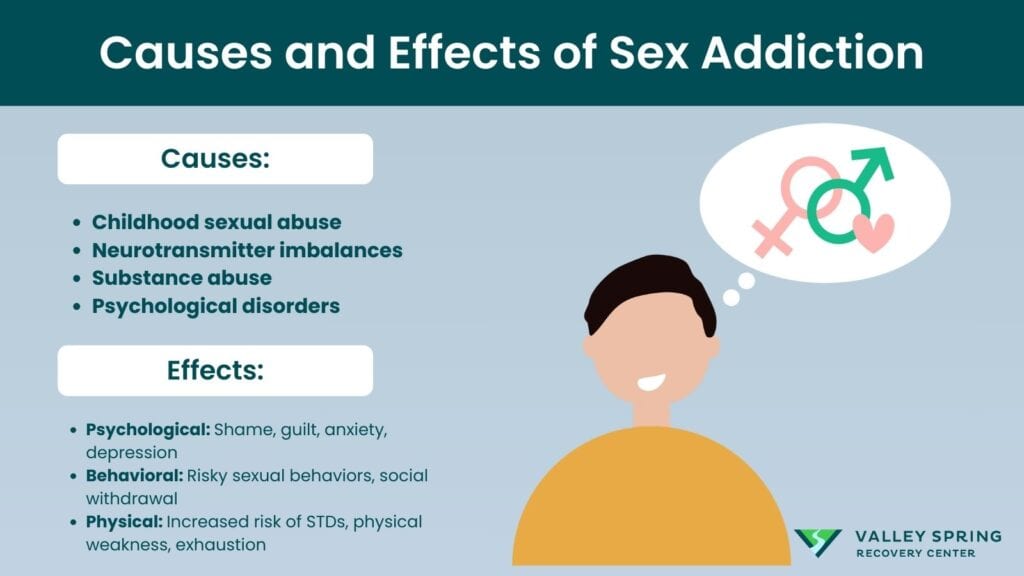
Causes of sex addiction include childhood sexual abuse, neurotransmitter imbalances, substance abuse, and various psychological disorders.
Effects of sex addiction include profound impacts on mental and physical health, such as shame, guilt, social withdrawal, and physical weakness over time.
Treatment for sex addiction encompasses various options such as medications, cognitive-behavioral therapy, self-help support groups, 12-step programs, inpatient treatment programs, and counseling.
What is Sex addiction?
Sex addiction, also known as hypersexuality, involves a lack of control over sexual urges and impulsive sexual behaviors despite harmful consequences. The 2006 study “Understanding and Managing Compulsive Sexual Behaviors” by Timothy W. Fong, published in Psychiatry (Edgmont), describes this condition as involving persistent intrusive sexual thoughts, frequent excessive sexual activities, and an inability to regulate sexual behavior, leading to significant distress in personal and social relationships. While sex addiction is not classified as a distinct disorder in the Diagnostic and Statistical Manual of Mental Disorders (DSM-5-TR), it is encompassed under compulsive sexual behavior.
Did you know most health insurance plans cover substance use disorder treatment? Check your coverage online now.
What is the difference between sex addiction and drug addiction?
The difference between sex addiction and drug addiction is that sex addiction involves compulsive behaviors related to sexual activity, driven by the brain’s reward system, while drug addiction involves dependence on substances that alter brain chemistry and create a physical need for the drug. The study “Neural Correlates of Sexual Cue Reactivity in Individuals with and without Compulsive Sexual Behaviours” by Valerie Voon et al., published in 2014 in PLOS One, provides insights into these similarities and differences through brain activity comparisons.
| Aspect | Sex Addiction | Drug Addiction |
| Definition | Uncontrollable sexual desires and frequent engagement in sexual activities. | Compulsive use of drugs despite harmful consequences. |
| Brain Activity | Increased activity in the ventral striatum, dorsal anterior cingulate, and amygdala when viewing sexually explicit videos, similar to the brain activity seen in drug addicts when presented with drug-related stimuli. | Increased activity in the ventral striatum, dorsal anterior cingulate, and amygdala when exposed to drug-related cues, indicating a parallel in the neural response to addictive cues. |
| Stimuli | Sexual cues, such as explicit videos, trigger compulsive sexual behaviors. | Drug-related cues, such as the sight or thought of drugs, trigger drug-seeking behavior. |
| Behavioral Manifestations | Increased masturbation, porn addiction, excessive time spent on sexual activities, risky sexual behavior, and infidelity. | Drug-seeking behavior, continued use despite negative consequences, and a preoccupation with obtaining and using drugs. |
| Causes | Childhood sexual abuse, neurotransmitter imbalances, substance abuse, and psychological disorders. | Genetic predisposition, environmental factors, psychological stress, and exposure to drugs. |
| Effects | Mental and physical health impacts include shame, guilt, social withdrawal, and physical weakness. | Severe health consequences, including organ damage, mental health issues, and social isolation. |
| Treatment | Medications, cognitive-behavioral therapy, self-help support groups, 12-step programs, inpatient treatment programs, and counseling. | Detoxification, medications, cognitive-behavioral therapy, support groups, inpatient and outpatient rehabilitation programs. |
What is the difference between sex addiction and anxiety disorders?
The difference between sex addiction and anxiety disorders is that sex addiction involves compulsive sexual behaviors, while anxiety disorders are characterized by excessive worry and fear. The study “Sexual Addiction Disorder—A Review With Recent Updates” by Shivangi Mehta, Sujita Kumar Kar, and Pronob Kumar Dalal, published in 2022 in the Journal of Psychosexual Health, provides a comprehensive review of sexual addiction disorder and its relationship with other mental health conditions, including anxiety disorders.
| Aspect | Sex Addiction | Anxiety Disorders |
| Definition | Uncontrollable sexual desires and frequent engagement in sexual activities despite negative consequences. | Mental health conditions are characterized by excessive fear, worry, or anxiety that interfere with daily activities. |
| Characteristics | Obsessive sexual thoughts, excessive sexual behaviors, and inability to control sexual urges lead to significant distress and impairment in social and personal life. | Persistent and excessive worry, restlessness, fatigue, difficulty concentrating, and physical symptoms such as increased heart rate and sweating. |
| Brain Activity | Increased activity in the ventral striatum, dorsal anterior cingulate, and amygdala when exposed to sexual stimuli. | Involves the amygdala and prefrontal cortex, with heightened activity in response to perceived threats or stressors. |
| Behavioral Manifestations | Increased masturbation, porn addiction, excessive time spent on sexual activities, risky sexual behavior, and infidelity. | Avoidance behaviors, constant reassurance-seeking, and difficulty handling uncertainty. |
| Causes | Childhood sexual abuse, neurotransmitter imbalances, substance abuse, and various psychological disorders. | Genetic predisposition, environmental stressors, trauma, and imbalances in brain chemicals such as serotonin and norepinephrine. |
| Comorbidity | Often presents with anxiety disorders, depression, and other mental health conditions. | Frequently, it co-occurs with depression, other anxiety disorders, and physical health issues like chronic pain. |
| Treatment | Medications, cognitive-behavioral therapy, self-help support groups, 12-step programs, inpatient treatment programs, and counseling. | Medications (antidepressants, anxiolytics), cognitive-behavioral therapy, mindfulness-based stress reduction, and counseling. |
What is the difference between Sex Addiction and high sex drive?
The difference between sex addiction and high sex drive is that sex addiction involves compulsive sexual behaviors despite negative consequences, whereas a high sex drive is simply a strong desire for sex without the compulsive and harmful aspects. The study “What Distinguishes Sex Addiction From Naturally High Sex Drives?” by researchers from Portugal and Croatia, published in 2015 and discussed in The Right Step, provides clear evidence for these differences.
| Aspect | Sex Addiction | High Sex Drive |
| Definition | An inability to control impulsive sexual urges and activities leads to negative impacts on various aspects of life. | A strong sexual drive and relatively frequent involvement in sexual activities, while maintaining a generally healthy and functional life. |
| Control Over Urges | Struggles to control, manage, or stop sexual urges, leading to compulsive behavior. | Manage, postpone, or stop sexual urges when necessary, showing self-control over sexual desires. |
| Impact on Life | Negatively affects personal relationships, work, and social life, causing significant distress and impairment. | Does not interfere with daily functioning or cause significant distress, maintaining balance in personal and professional life. |
| Behavioral Manifestations | Engaging in risky sexual behaviors, excessive time spent on sexual activities, increased masturbation, and porn addiction. | Frequent sexual activities within the bounds of a healthy lifestyle, without engaging in harmful or risky behaviors. |
| Mental Health Association | Often associated with other mental health conditions such as anxiety disorders, depression, and substance abuse. | Typically not linked to other mental health issues and does not cause psychological distress. |
| Social and Personal Effects | This leads to feelings of shame, guilt, and social withdrawal due to the inability to control sexual behavior. | Individuals maintain positive social relationships and self-esteem, without significant negative emotional consequences. |
| Research Findings | The study supports that the key difference lies in the ability to control sexual desires. Sex addicts struggle with this control, while those with a high sex drive regulate their impulses effectively. | The study indicates that individuals with a high sex drive exhibit strong self-control, enabling them to lead balanced and healthy lives. |
Contact us today to schedule an initial assessment or to learn more about our services. Whether you are seeking intensive outpatient care or simply need guidance on your drug addiction journey, we are here to help.
What is the difference between Sex Addiction and porn addiction?
Sex addiction involves compulsive engagement in a range of sexual activities, while porn addiction specifically relates to the compulsive viewing of pornographic material. The study “Pornography Addiction and Mental Health: A Cross-Sectional Study” by Syed Noor Muhammad, Syed Sajid Hussain Shah, and Iftikhar Hussain, published in 2021 in the Journal of Psychosexual Health, provides insights into porn addiction that highlight these differences.
| Aspect | Sex Addiction | Porn Addiction |
| Definition | An inability to control impulsive sexual urges and activities leads to negative impacts on various aspects of life. | A compulsive pattern of viewing pornographic material, despite negative consequences. |
| Focus of Addiction | Engages in a range of sexual activities, including physical interactions such as infidelity, excessive masturbation, and risky sexual behaviors. | Primarily involves the obsessive consumption of pornographic content, with a focus on viewing rather than physical interactions. |
| Control Over Urges | Struggles to control, manage, or stop a variety of sexual urges, leading to compulsive behavior. | Struggles to control the urge to view pornography, leading to compulsive watching behavior. |
| Impact on Life | Negatively affects personal relationships, work, and social life, causing significant distress and impairment. | This leads to neglect of personal relationships, responsibilities, and social activities, often causing guilt and shame. |
| Behavioral Manifestations | Engaging in risky sexual behaviors, excessive time spent on various sexual activities, increased masturbation, and infidelity. | Spending excessive time watching porn, often to the detriment of personal and professional responsibilities. |
| Mental Health Association | Often associated with other mental health conditions such as anxiety disorders, depression, and substance abuse. | Linked to mental health issues such as depression, anxiety, and low self-esteem. |
| Social and Personal Effects | This leads to feelings of shame, guilt, and social withdrawal due to the inability to control sexual behavior. | May cause isolation, relationship issues, and emotional distress due to excessive pornography consumption. |
| Research Findings | Emphasizes the interactive nature of sex addiction, involving real-life sexual activities and interactions. | Focuses on the compulsive viewing behavior in porn addiction, highlighting its distinction as a specific form of behavioral addiction. |
What are the Signs and Symptoms of Sex addiction?
The signs and symptoms of sex addiction include obsessive sexual thoughts, excessive time spent on sexual activities, feelings of shame or depression, neglecting responsibilities due to sexual preoccupation, and engaging in risky or inappropriate sexual behaviors.
According to the study “Understanding and Managing Compulsive Sexual Behaviors” by Timothy W. Fong, published in 2006 in the journal Psychiatry (Edgmont), several key symptoms and signs characterize this condition. These symptoms highlight the overwhelming nature of the addiction and its impact on daily functioning.
- Recurrent failure to resist impulses to engage in specific sexual behaviors: Individuals with sex addiction often find themselves unable to resist the urge to engage in sexual activities. This recurrent failure to control impulses disrupts their daily routines and obligations.
- Engaging in behaviors to a greater extent or over a longer period than intended: Those suffering from sex addiction frequently participate in sexual activities for more extended periods or with more intensity than they initially planned. This escalation lead to increased risk and negative consequences.
- Persistent desire or unsuccessful efforts to stop, reduce, or control behaviors: Despite recognizing the harmful effects, individuals may struggle to reduce or control their sexual behaviors. This persistent desire to stop, coupled with repeated unsuccessful attempts, signifies a deep-rooted compulsion.
- Spending an inordinate amount of time on sexual activities: A significant portion of their time is spent on obtaining sex, being sexual, or recovering from sexual experiences. This preoccupation interferes with personal and professional responsibilities.
- Preoccupation with sexual behavior or preparatory activities: Individuals often find themselves constantly thinking about sexual activities or preparing for them. This preoccupation dominates their thoughts and detracts from other important aspects of life.
- Engaging in sexual behavior when expected to fulfill other obligations: They might engage in sexual activities even when they are expected to meet occupational, academic, domestic, or social responsibilities. This behavior leads to neglect of essential duties and responsibilities.
- Continuation of behavior despite adverse consequences: Even when aware of the persistent or recurrent social, financial, psychological, or physical problems caused by their behavior, they continue to engage in it. This continuation despite adverse consequences highlights the compulsive nature of the addiction.
- Increasing intensity, frequency, or risk to achieve the desired effect: To achieve the same level of satisfaction, individuals may need to increase the intensity, frequency, number, or risk of their sexual behaviors. This escalation leads to dangerous and harmful situations.
- Giving up or limiting social, occupational, or recreational activities: They might withdraw from or limit participation in social, occupational, or recreational activities due to their sexual behavior. This withdrawal leads to isolation and a diminished quality of life.
What are the stages of Sex addiction?
The 5 stages of sexual addiction are preoccupation, ritualization, sexual activity, guilt and shame, and despair. Dr. Timothy W. Fong’s study “Understanding and Managing Compulsive Sexual Behaviors,” published in 2006 in the journal Psychiatry (Edgmont), provides valuable insights into the cyclical nature of compulsive sexual behaviors. While the study does not explicitly outline the five stages of sex addiction, it helps explain how these behaviors develop and reinforce themselves over time.

Rediscover Life at Valley Spring Recovery Center
Get the compassionate support you deserve. We're here to help you reclaim joy, wellness, and a brighter future.
Verify Benefits
1. Preoccupation
Individuals become obsessed with sexual thoughts and fantasies. This preoccupation dominates their minds, making it difficult to focus on daily responsibilities and activities. The constant mental engagement with sexual content sets the groundwork for subsequent behaviors.
2. Ritualization
Individuals begin to engage in ritualistic behaviors that lead to sexual activity. These rituals include specific routines, such as watching pornography, visiting certain websites, or preparing for sexual encounters. These actions create a sense of anticipation and excitement, reinforcing the compulsive nature of the addiction.
3. Sexual Activity
This stage involves engaging in the sexual behavior that the individual has been obsessing over and preparing for. The temporary relief or pleasure experienced during this stage strengthens the addiction, making it more challenging to break free from the cycle.
Are you covered for treatment?


Valley Spring Recovery Center is an approved provider for Blue Cross Blue Shield and Cigna, while also accepting many other major insurance carriers.
Check Coverage Now!4. Guilt and Shame
After engaging in compulsive behavior, individuals often feel remorseful and distressed about their actions. These negative emotions contribute to the cyclical nature of sex addiction, as individuals may seek out sexual activities again to cope with their guilt and shame.
5. Despair
Individuals realize the impact of their addiction on their lives. This stage involves recognizing the damage done to personal relationships, work, and overall well-being. The sense of hopelessness and helplessness during this stage underscores the need for intervention and treatment to break the cycle of addiction.
What are the different types of Sex addiction?
Sex addiction comes in different forms, including biological, psychological, spiritual, trauma-based, intimacy anorexia, and mood disorder sex addictions. According to Robert N. Minor in his 2007 book When Religion Is an Addiction, and the 2018 article from SexAddict.com titled “Six Types of Sex Addicts,” these types can be broadly categorized as follows:
Did you know most health insurance plans cover substance use disorder treatment? Check your coverage online now.
1. Biological Sex Addiction
Biological sex addiction is driven by uncontrollable biological urges due to hormonal imbalances or neurochemical deficiencies. Individuals with this type of addiction feel compelled to engage in sexual activities frequently and excessively.
2. Spiritual Sex Addiction
Spiritual sex addiction involves using sex to achieve a sense of spiritual connection or fulfillment. These individuals often confuse physical intimacy with spiritual enlightenment, seeking deeper meaning or spiritual highs through sexual experiences.
3. Trauma-Based Sex Addiction
Trauma-based sex addiction occurs when individuals use sex as a way to cope with past traumas, such as abuse or neglect. This type of addiction serves as a method to numb emotional pain or regain a sense of control that was lost due to their traumatic experiences.
Contact us today to schedule an initial assessment or to learn more about our services. Whether you are seeking intensive outpatient care or simply need guidance on your drug addiction journey, we are here to help.
4. Mood Disorder Sex Addiction
Mood disorder sex addiction is found in individuals with underlying mood disorders like depression or anxiety. They use sex to temporarily alleviate their symptoms, seeking emotional relief and a brief escape from their mental health issues through sexual activities.
5. Psychological Sex Addiction
Psychological sex addiction affects individuals struggling with deep-seated psychological issues such as low self-esteem or unresolved emotional conflicts. They engage in compulsive sexual behavior to feel validated and accepted or to fill an emotional void.
6. Intimacy Anorexia Sex Addiction
Intimacy anorexia sex addiction involves avoiding emotional intimacy with partners. Individuals with this type of addiction engage in sex addiction to maintain a sense of control and avoid vulnerability, distancing themselves emotionally while still seeking physical gratification.
Rediscover Life at Valley Spring Recovery Center
Get the compassionate support you deserve. We're here to help you reclaim joy, wellness, and a brighter future.
Verify BenefitsWhat are the causes of Sex addiction or hypersexuality?
Sex addiction, also known as hypersexuality, is attributed to a combination of neurobiological factors (related to brain structure and function), genetic predispositions, and environmental influences (such as life experiences and stress). The study “The Neurobiology of Sexual Addiction” by Shane W. Kraus, Valerie Voon, and Marc N. Potenza, published in 2016 in the journal Current Sexual Health Reports, provides a comprehensive overview of these factors. This research offers a deeper understanding of the biological underpinnings of sex addiction, complementing the psychological and social factors often discussed.
Alterations in brain structure and function: Changes in brain regions associated with reward processing and impulse control, such as the prefrontal cortex and the amygdala, contribute to the development of sex addiction. These alterations may impair an individual’s ability to regulate their impulses and assess the consequences of their actions.
Dysregulation of neurotransmitter systems: Imbalances in neurotransmitters, particularly dopamine and serotonin, play a crucial role in sex addiction. Dopamine is associated with reward and pleasure, while serotonin helps regulate mood and behavior. Dysregulation in these systems leads to compulsive sexual behaviors as individuals seek to achieve a rewarding feeling.
Genetic factors: Genetic predisposition makes some individuals more susceptible to addictive behaviors, including sex addiction. Studies have suggested that certain genetic variations influence brain chemistry and structure, increasing the likelihood of developing compulsive sexual behaviors.
Environmental influences: Early life experiences, such as childhood trauma or sexual abuse, and ongoing stress significantly impact the development of sex addiction. These environmental factors alter brain development and functioning, making individuals more prone to seeking out sexual behaviors as a coping mechanism.
Role of hormonesHormones, particularly testosterone, play a significant role in sexual behavior and addiction. Elevated levels of testosterone have been linked to increased sexual desire and risk-taking behaviors, potentially contributing to the development of sex addiction.
What are the effects of Sex addiction?
The effects of sex addiction are severe and wide-ranging, including damaged relationships, financial problems, health risks like STDs, legal issues, and negative impacts on mental health such as depression and anxiety. According to the study “The Neurobiology of Sexual Addiction” by Shane W. Kraus, Valerie Voon, and Marc N. Potenza, published in 2016 in the journal Current Sexual Health Reports, the neurobiological factors associated with sexual addiction lead to various adverse effects. Alterations in brain structure and function, particularly in regions associated with reward processing and impulse control, contribute significantly to these outcomes.
- Psychological Effects: Individuals with sex addiction often experience intense shame and guilt due to their inability to control sexual urges and behaviors. This shame leads to severe depression and anxiety, further exacerbating the compulsion to engage in sexual activities as a coping mechanism. The continuous cycle of compulsive behavior and emotional distress creates a profound negative impact on mental health.
- Behavioral Consequences: The inability to control sexual urges leads to engaging in risky sexual behaviors. This includes having multiple sexual partners, engaging in unprotected sex, and participating in activities that increase the risk of contracting sexually transmitted diseases (STDs). These behaviors not only pose health risks but also contribute to feelings of guilt and shame.
- Social and Interpersonal Effects: Sex addiction severely damages personal relationships, causing strain in marriages and partnerships. The compulsive need for sexual activity often leads to infidelity and deceit, eroding trust and intimacy. Additionally, the preoccupation with sexual behavior results in neglect of family responsibilities and social obligations, leading to social isolation and loneliness.
- Occupational and Academic Impact: The constant preoccupation with sexual thoughts and activities interferes with an individual’s ability to perform effectively at work or school. This distraction leads to decreased productivity, poor performance, and, ultimately, job loss or academic failure.
- Physical Health Issues: The engagement in frequent and often risky sexual behaviors has direct consequences on physical health. This includes an increased risk of STDs, physical exhaustion, and potential injuries related to sexual activities. Over time, the physical toll of maintaining such a high level of sexual activity leads to significant health deterioration.
How is sex addiction treated?
Sex addiction requires a comprehensive approach that addresses the mind, body, and social environment. According to the study “Hypersexual Disorder: Clinical Presentation and Treatment” by Meg S. Kaplan and Richard B. Krueger, published in 2010 in the journal Current Psychiatry Reports, various treatment options have been identified as effective for sex addiction.

Are you covered for treatment?
Valley Spring Recovery Center is an approved provider for Blue Cross Blue Shield and Cigna, while also accepting many other major insurance carriers.
Check Coverage Now!1. Psychotherapy
Cognitive-behavioral therapy (CBT) is one of the most effective forms of psychotherapy for treating sex addiction. CBT helps individuals identify and change the thoughts and behaviors that contribute to their compulsive sexual activities. Through this therapeutic approach, patients learn to develop healthier coping mechanisms and strategies to manage their urges and impulses.
2. Pharmacological Interventions
Medications, particularly selective serotonin reuptake inhibitors (SSRIs), be used to treat sex addiction. SSRIs help regulate mood and reduce compulsive behaviors by balancing neurotransmitter levels in the brain. These medications are often prescribed to help manage underlying conditions such as depression and anxiety that may co-occur with sex addiction.
3. Self-help Groups and 12-Step Programs
Participation in self-help groups and 12-step programs, such as Sex Addicts Anonymous (SAA), provides individuals with a supportive community of peers who understand their struggles. These groups offer a structured environment for sharing experiences, gaining support, and developing accountability in the recovery process.
Did you know most health insurance plans cover substance use disorder treatment? Check your coverage online now.
4. Combination Treatments
Combining psychotherapy with medication enhances the effectiveness of treatment for sex addiction. This integrated approach addresses both the psychological and biological aspects of the disorder, providing a more comprehensive treatment plan. Patients receiving combination treatments often experience better outcomes in managing their hypersexual behaviors.
5. Inpatient Treatment Programs
For severe cases of sex addiction, inpatient treatment programs may be necessary. These programs offer intensive therapy and support in a controlled environment, allowing individuals to focus entirely on their recovery without the distractions and triggers of daily life. Inpatient treatment is particularly beneficial for those with co-occurring disorders or who have not responded to outpatient treatments.
What are the withdrawal symptoms of sex addiction?
The withdrawal symptoms of sex addiction include mood swings, depression, anxiety, intense sexual urges or cravings, difficulty sleeping, irritability, physical symptoms like headaches and body aches, and trouble focusing or concentrating. According to the study “Sexual Addiction and Compulsivity: Diagnosis and Treatment” by Patrick Carnes, published in 2001 in the journal CNS Spectrums, individuals with sex addiction experience a range of withdrawal symptoms when they attempt to stop their compulsive sexual behaviors.
| Symptom | Description |
| Mood Swings | Individuals may experience mood swings ranging from irritability and frustration to deep depression. These changes occur as the brain adjusts to the absence of frequent sexual stimulation. |
| Anxiety | Characterized by feelings of restlessness, nervousness, and fear, anxiety during withdrawal often stems from the uncertainty of managing life without compulsive behaviors. |
| Sleep Disturbances | Many individuals find it difficult to fall asleep or stay asleep, leading to fatigue and emotional instability. The lack of sexual activity disrupts established sleep patterns. |
| Intense Cravings | Cravings for sexual activity can be overwhelming, causing obsessive thoughts about sexual behaviors and making it difficult to focus on other aspects of life. Strong urges can lead to relapse. |
Contact us today to schedule an initial assessment or to learn more about our services. Whether you are seeking intensive outpatient care or simply need guidance on your drug addiction journey, we are here to help.
Can sex addiction co-occur with other mental health disorders?
Yes, sex addiction often co-occurs with other mental health disorders, such as anxiety, depression, and substance abuse. These co-occurring conditions exacerbate the compulsive behaviors associated with sex addiction and complicate the treatment process.
How can someone differentiate between a high sex drive and sex addiction?
While a high sex drive involves frequent sexual thoughts and activities, individuals with a high sex drive maintain control over their urges and do not experience significant negative impacts on their lives. In contrast, sex addiction is characterized by an inability to control sexual impulses, leading to distress and impairment in personal, social, and occupational areas.
Is sex addiction recognized as a medical condition?
Although sex addiction, or hypersexuality, is not classified as a distinct disorder in the Diagnostic and Statistical Manual of Mental Disorders (DSM-5-TR), it is recognized under the broader category of compulsive sexual behavior. Medical and mental health professionals acknowledge it as a significant issue that requires appropriate treatment.
Rediscover Life at Valley Spring Recovery Center
Get the compassionate support you deserve. We're here to help you reclaim joy, wellness, and a brighter future.
Verify BenefitsWhat role does trauma play in the development of sex addiction?
Trauma, especially childhood sexual abuse, is a significant factor in the development of sex addiction. Early traumatic experiences lead to altered brain development and functioning, making individuals more susceptible to seeking out compulsive sexual behaviors as a coping mechanism.
Are there long-term consequences of untreated sex addiction?
Untreated sex addiction leads to severe long-term consequences, including chronic mental health issues like depression and anxiety, damaged relationships, social isolation, financial problems, and significant physical health risks such as sexually transmitted diseases (STDs). Early intervention and comprehensive treatment are crucial for mitigating these long-term effects.
Share This Post

Valley Spring Editorial Team
All author posts
Our Therapuetic Recovery Programs
Are you covered for treatment?







Valley Spring Recovery Center is an approved provider for Blue Shield of California and Cigna, while also accepting many other major insurance carriers.
Check Coverage Now!