Depression: Symptoms, Causes, Types, and Treatment

Depression, clinically known as major depressive disorder is a mental health condition that leaves people feeling sad and uninterested in daily life activities.
Some of the major symptoms include low mood or sadness, poor concentration, loss of interest in hobbies and activities, appetite and weight changes, mood swings and anger outbursts, disturbed sleeping patterns, feelings of hopelessness, suicidal thoughts and attempts, restlessness, and physical impacts.
The causes of depression can include brain chemistry, genetics, hormone levels, and traumatic events. Treatment usually involves psychotherapy, medication, electroconvulsive therapy (ECT), brain stimulation therapy, and counseling.
Common types of depression are usually found to be clinical depression (major depressive disorder), persistent depressive disorder (PDD), prenatal and postpartum depression, atypical depression, and seasonal depression.
What is Depression?
Depression or clinical depression is considered a critical mental health condition. It has a major impact on how a person behaves, feels, and handles their daily life activities. Usually, a person with depression might feel persistently sad, losing all hope and interest in almost all activities. Depression can be influenced by genetic, biological, environmental, or psychological factors.
Based on the Diagnostics and Statistical Manual of Mental Disorders, fifth edition (DSM – 5), the presence of the major depressive disorder is characterized by a minimum of 5 symptoms identified. Some of these symptoms might include depressive mood, loss of interest in activities, insomnia, tiredness, feeling guilty and worthless, loss of focus, or suicidal thoughts. Among these symptoms, at least one needs to be in either a sad mood or loss of interest in activities for a minimum 2-week time period.
Depression is a common health issue in the United States. According to a report by the National Institute of Mental Health (NIMH), almost 8.3% of all adults in the US experienced at least 1 major depressive episode. According to the Centers for Disease Control (CDC), in New Jersey, 18% of adults have experienced symptoms of depression.
What are the signs and symptoms of depression?
The common signs and symptoms of depression include low mood or sadness, poor concentration, loss of interest in hobbies and activities, appetite and weight changes, mood swings and anger outbursts, disturbed sleeping patterns, feelings of hopelessness, suicidal thoughts and attempts, restlessness, and physical impact.

The most common signs and symptoms of depression are listed below.
- Low mood or sadness: Constantly feeling sad and hopeless throughout the day, almost regularly is a common sign of depression. As per a report published by the National Comorbidity Survey Replication, people suffering from depression might feel greatly saddened and cry frequently. This makes it difficult for them to find joy in daily life activities.
- Poor concentration: Poor concentration refers to trouble focusing on things, making decisions, and remembering details. Based on research published by Cambridge University, losing focus in a depressive episode can lead to a struggle to keep up with conversations or to complete daily tasks at work or school. This can lead to trouble being productive.
- Loss of interest in hobbies and activities: A significant drop in some or all activities during most of the day is a significant symptom of depression. According to research by the National Institute of Health, this symptom is known as anhedonia and causes people to lose interest in several activities they once enjoyed, like hobbies and socializing.
- Appetite and weight changes: There’s a significant weight loss even without dieting, or might gain weight and appetite pattern change. According to Molecular Psychiatry, depression can either make a person overeat or not eat at all, leading to significant weight fluctuations. This further deteriorates physical health and self-esteem.
- Mood swings and anger outbursts: There are sudden shifts in moods and outbursts of emotions, leading to periods of irritability and anger. Based on the Journal of Clinical Psychiatry, depressed individuals may be more sensitive to psychological stimuli and react with anger or frustration, even if it’s something minor.
- Disturbed sleeping patterns: Disturbed sleeping patterns refer to having trouble managing a normal sleep cycle almost daily. According to Science Direct, depression often causes problems in sleeping on time, staying asleep, or waking up on time. On the other hand, some people might oversleep and still feel tired.
- Feelings of hopelessness: Hopelessness refers to a constant feeling of not being able to do anything about any matter. As per American Family Physicians, people having a depressive episode often feel like there’s nothing that can bring any improvement to their situation. This makes them further feel entrapped in this situation.
- Suicidal thoughts and attempts: There are recurrent thoughts of death and suicide with no plan in mind and even an attempt. According to the British Journal of Psychiatry, suicidal thoughts can vary from person to person and can be about self-harm or plans to end one’s life. For this symptom, there should be immediate intervention for the patient’s safety.
- Restlessness: There’s physical discomfort and a constant inability to sit still and be on the edge. According to the Wiley Online Library, this symptom is usually found with a feeling of anxiety where people can not stay still and move at a pace.
- Physical effects: There are impacts on physical health as well, like back pain, stomach issues, or headaches. As per JAMA Internal Medicine, depression can show its symptoms in physical form as well, leading to chronic pain and illness. These impacts can further complicate the depressive episode and treatment.
What are the causes of depression?
The common causes of depression can include brain chemistry, genetics, hormone levels, and traumatic events.
Some of the main causes of depression are listed here.
- Brain chemistry: There can be an imbalance in the neurotransmitters present in the brain. According to the Molecular Neurobiology of Depression, usually serotonin, dopamine, and norepinephrine are the important neurotransmitters controlling mood. When the normal levels of these chemicals are disturbed for any reason, it can lead to a depressive episode.
- Genetics: Genetics are the hereditary factors that can enhance the risk of experiencing depression. Depression is known to run through families. People who have a first-degree relative suffering from depression might have a greater risk of developing it sooner or later as well.
- Hormone levels: Having fluctuations and imbalances in the hormone levels can lead to the onset of depression. According to the NHS, It’s more common in women that an imbalance in hormones leads to the development of a depressive episode. Usually, women who are going through pregnancy, postpartum period, menopause, and thyroid issues are more likely to experience depression.
- Traumatic events: There can be some negative events in a person’s life that can impact their mental health. Experiencing any trauma, like the loss of a loved one, abuse, financial problems, or an accident, can lead to the development of depression. Traumatic events can lead to disruption in brain functions and lead to emotion regulation.
What are the risk factors of depression?
The high-risk factors for developing depression can include sex (gender), family history of depression, traumatic life events, gender identity, and drug addiction.
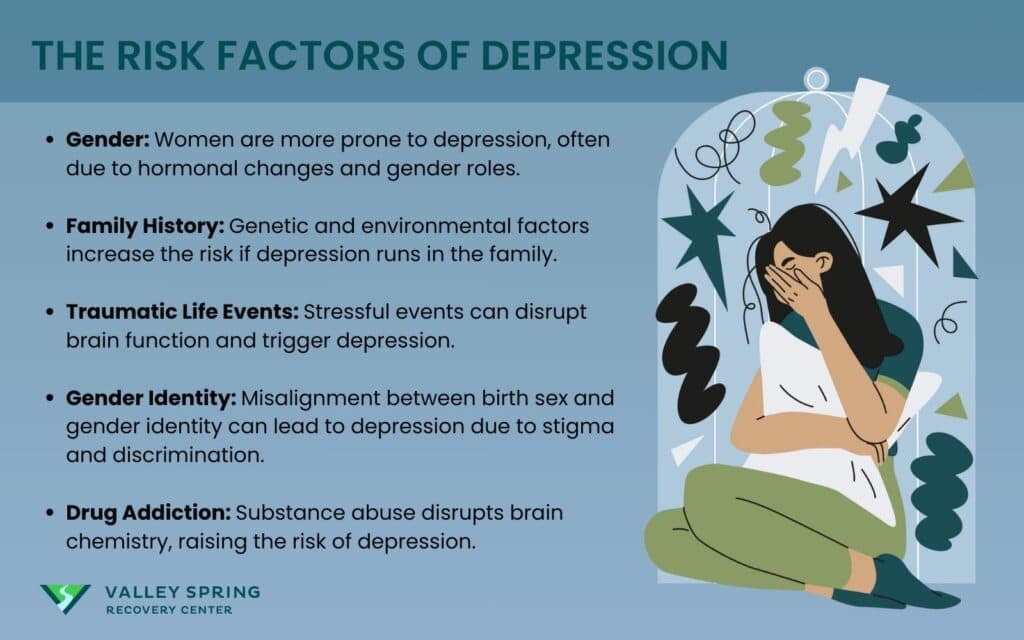
The main risk factors of depression are listed below.
- Sex (gender): Gender refers to the biological differences between males and females that can trigger the development of depression. Usually, women are more likely to experience depressive orders than men. This could mainly be due to hormonal fluctuations. Furthermore, gender roles and social expectations can also have an impact on the development of depression.
- Family history of depression: Due to genetic and shared environmental factors, people with a family history of depression are more likely to suffer from it. Genetics can play a great role in influencing the onset of depression.
- Traumatic life events: Stressful or negative experiences can impact the mental health of a person. A traumatic event in life can alter the normal functioning of the brain and associated emotions. Any bad experience in life can influence and trigger the development of depression.
- Gender identity: This is when a person’s sense of gender does not correspond with their birth sex. People who identify as some other gender than their birth sex are likely to experience depression due to discrimination and social stigma. The unsupportive environment they might experience can lead to the development of a depressive episode.
- Drug addiction: The irregular use of substances can lead to significant damage to physical and mental health. Constant use of drugs and alcohol can disrupt brain chemistry. People dependent on the use of drugs are usually at high risk of developing the symptoms of depression.
What are the types of Depression?
The common types of depression include clinical depression (major depressive disorder), persistent depressive disorder (PDD), prenatal and postpartum depression, atypical depression, and seasonal depression.
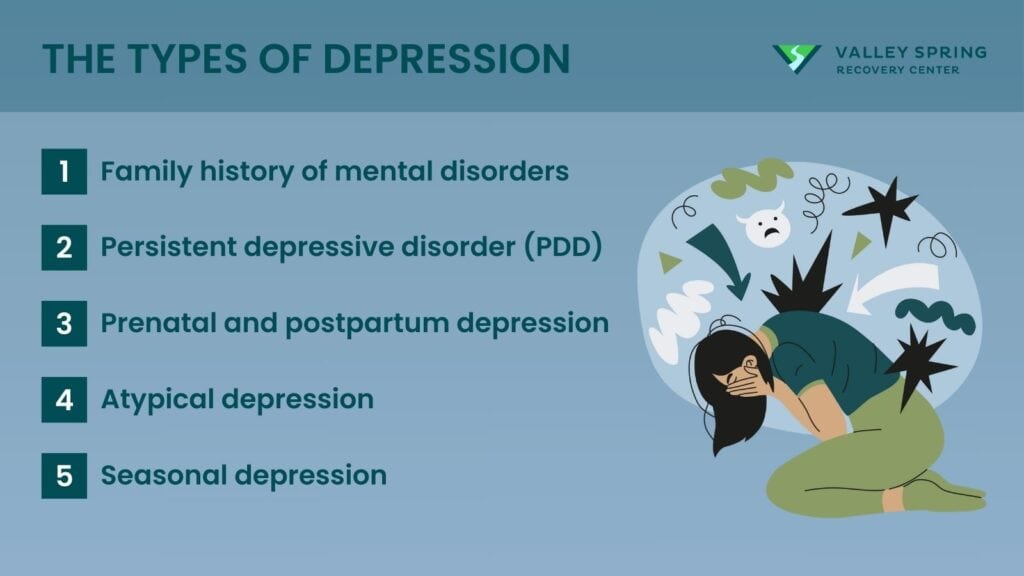
Common types of depression are listed below:
- Clinical depression (major depressive disorder): Major depressive disorder is a severe feeling of sadness and loss of interest in daily life routine. People with MDD can experience symptoms like bad mood, fatigue, feelings of worthlessness, and suicidal thoughts. For diagnosis, these symptoms must be present for at least 2 weeks.
- Persistent depressive disorder (PDD): It is also known as dysthymia, and it is a chronic form of depression that lasts up to 2 years minimum. PDD involves a constant and long-term form of depression. While the symptoms are not as severe as MDD, they are long-term and can interfere with daily life functioning.
- Prenatal and postpartum depression: Prenatal depression is experienced during pregnancy, whereas postpartum depression happens after childbirth. As per an article published by the Annual Review of Clinical Psychology, usually, this type of depression is either due to hormonal changes or the fear of childbirth and early parenting. Symptoms can include major mood swings, tiredness, and a constant feeling of hopelessness.
- Atypical depression: This is the type of depression where mood reactivity happens. Mood usually improves in response to varying positive stimuli. Some of its symptoms include increased appetite, weight gain, and oversleeping. This type of depression is usually difficult to diagnose and treat.
- Seasonal depression: Seasonal depression occurs at a certain time of the year, usually in winter. As per an article published by Researchgate, SAD is usually related to reduced exposure to sunlight during the shorter days of winter. Some of its symptoms include disturbed sleep patterns, overeating, weight gain, and sugar cravings.
How is Depression Diagnosed?
Depression is diagnosed through varying procedures to ensure that the diagnosis is right. At first, a physical examination is conducted to make sure if any physical conditions are causing or impacting that depressive condition. During this phase, medical history and current physical health are assessed.
Furthermore, lab tests are conducted, including blood tests, to check vitamin D and thyroid levels, as an imbalance of these in the blood can lead to depressive symptoms. Moving ahead, a physiatrist assessment is done where a detailed discussion happens with the patient regarding their symptoms, feelings, and behaviors. This helps to identify the presence, severity, and type of mental health condition. Usually, questionnaires and self-assessment tools are used to monitor the presence and progression of symptoms over time.
What are the treatment options for Depression?
Treatment options for depression include psychotherapy, medication, electroconvulsive therapy (ECT), brain stimulation therapy, and counseling.
The main treatment options for depression are listed below.
- Psychotherapy: Psychotherapy, also known as talk therapy, is where a mental health professional discusses thoughts, feelings, and behaviors to manage the symptoms. The time frame for this type of treatment usually ranges from 12-16 months almost. While it is effective in addressing underlying complications and teaching coping strategies, it might not be effective in severe forms of depression.
- Medication: Antidepressant medications are usually used to improve brain health. Medicines like SSRIs, SNRIs and tricyclic antidepressants are usually prescribed by an expert. These medicines might show an effect within 4-6 weeks while full effect might result in almost 6-12 weeks. It can be very effective for all severities of depression. However, they might have some side effects like weight gain and sleep pattern disruptions.
- Electroconvulsive therapy (ECT): This treatment involves transmitting small electric currents to the brain to instantly relieve the depression symptoms. The recovery time usually ranges from 3-4 weeks, and people observe positive results after a few sessions. ECT is very effective for severe forms of depression. On the other hand, there might be some symptoms like memory loss and confusion.
- Brain stimulation therapy: This form of treatment usually includes repetitive transcranial magnetic stimulation (rTMS) and vagus nerve stimulation (VNS) brain areas that regulate mood are stimulated using electric impulses. Based on the type of stimulation used, the timeframe for the treatment can vary from weeks to months. While it is effective where other treatments might fail, it can be a bit costly.
- Counseling: This treatment allows the patient to discuss emotional issues and work on strategies to cope with the stress and emotional strain associated with them. The time frame for recovery depends on the individual. Some might recover after taking just a few sessions, while others might require long-term sessions. It’s very effective to provide patients with emotional support. However, it might not be very effective for severe forms of depression.
What psychological conditions are similar to depression?
Other conditions that are found to be similar to depression are anxiety, bipolar disorder, and PTSD.
What is the difference between depression and anxiety?
Depression is a condition where a person constantly feels sad and loses interest in activities. Anxiety is a condition where a person might experience excessive worry and nervousness that disrupt the daily routine. While both of these conditions might simultaneously occur, they have their differences. Depression has a prolonged impact, leaving the person feeling sad and hopeless for a longer time, whereas anxiety is associated with fear and anticipation of the future.
What is the difference between depression and bipolar disorder?
Depression is known to be a mood disorder where a patient feels saddened for a prolonged period. Bipolar disorder is a condition where extreme mood shifts are experienced, including emotional highs and lows. While both of these conditions include depressive episodes, bipolar disorder also has another emotional high where patients might feel the complete opposite of depression. During bipolar disorder, the emotions are more severe than the consistent yet less high episodes of depression.
What is the difference between depression and PTSD?
Depression is characterized as a constant phase of low mood and sadness. Post-traumatic stress disorder, or PTSD, is a mental health condition that is triggered after experiencing some form of a traumatic event in life. While depression can be stated as a symptom of PTSD, they stand as different conditions. Depression has a constant feeling of sadness, whereas PTSD includes flashbacks from that trauma.
Are there any ways to prevent depression?
While it is not always possible to ensure prevention, some strategies can be used like a healthy lifestyle, a good diet, and proper sleeping patterns. Moreover, it is better to intervene and treat symptoms asap.
Is depression a disability?
Yes, depression is considered to be a form of disability. Depression can usually hinder a person’s ability to operate normally within their daily life routine. This makes it a disability, especially under some laws like the Americans with disabilities act (ADA).
Is depression genetic?
Yes, depression can be developed due to genetic factors. Various research has shown that people with a family history of depression are at higher risk of developing depressive episodes. However, it is one of the various factors that can influence the onset of depression.
Can alcohol cause depression?
Yes, alcohol can be a cause of depression. It can alter brain chemistry to the extent that it can lead to depressive symptoms. Prolonged use of alcohol can lead to a severe extent of depression in individuals.
Share This Post

Valley Spring Editorial Team
All author posts
Our Therapuetic Recovery Programs
Are you covered for treatment?







Valley Spring Recovery Center is an approved provider for Blue Shield of California and Cigna, while also accepting many other major insurance carriers.
Check Coverage Now!